
SEO for Logistics SaaS: Attract High-Intent B2B Buyers Through Search and Operational Content
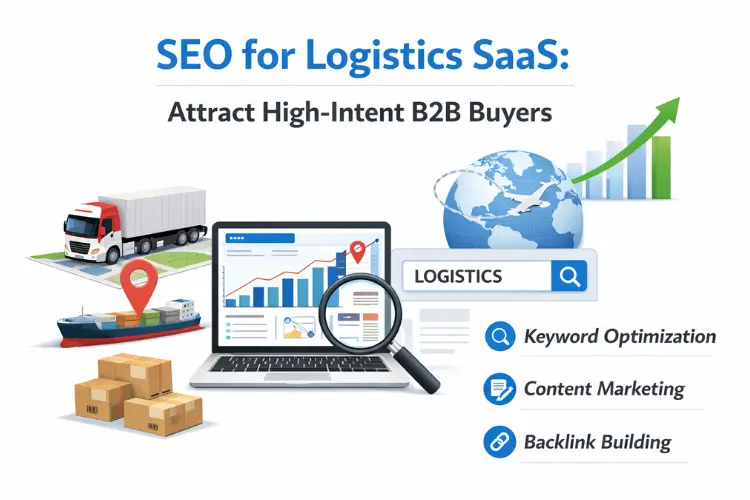
Search is one of the clearest ways B2B teams discover logistics software, compare options, and shortlist vendors. When your pages match what buyers are trying to understand, you earn qualified visits that feel like warm introductions. For logistics SaaS, SEO works best when it balances product detail with real operational context like carriers, lanes, SLAs, integrations, and compliance. The goal is simple: show up for the right queries, explain things in plain language, and make it easy to trust your platform.
- SEO for Logistics SaaS: Attract High-Intent B2B Buyers Through Search and Operational Content
- 1. Understand B2B logistics SaaS buyers and search intent
- 2. Build an SEO-ready site structure that helps it scale
- 3. Technical SEO fundamentals for SaaS platforms and marketing sites
- 4. Keyword research that fits logistics workflows and buying language
- 5. Content strategy that attracts logistics SaaS buyers and supports SEO
- 6. On-page SEO for product, solution, and integration pages
- 7. Conversion-focused SEO that turns traffic into qualified B2B leads
- 8. Earn authority with links, partnerships, and proof content
- 9. Rank in the right regions and niches with industry-specific SEO
- 10. Measure, iterate, and scale SEO for pipeline growth
1. Understand B2B logistics SaaS buyers and search intent
Logistics SaaS buyers usually arrive with a specific job to finish, not a casual interest. They search to confirm fit, reduce vendor risk, and prove the decision internally. Your SEO choices get easier when you treat each query as a clue about who is searching and what decision they are trying to make. Focus on the words people use in meetings and emails, not just what the product team calls features, and you will build pages that read naturally and rank more reliably.
1.1 Map buyer roles and what they care about
A logistics director often looks for service levels, exception handling, and carrier performance, while an IT lead checks security, APIs, and implementation effort. A finance stakeholder may search for pricing models, ROI, and cost-to-serve improvements. Writing for all of them does not mean stuffing one page with everything, it means creating pages that answer each role clearly.
Start by listing your common buyer roles and the decisions they influence. For each role, note the top 5 questions they ask during demos, procurement, and rollout. Those questions become headings, FAQs, and supporting articles, which helps your SEO while also making sales cycles smoother.
1.2 Turn operational needs into keyword themes
Logistics teams rarely search for a feature name in isolation. They search for outcomes like “reduce detention fees,” “automate POD collection,” or “improve on time in full.” Build keyword themes around workflows such as dispatch planning, track and trace, appointment scheduling, yard visibility, claims, and billing reconciliation.
A simple way to do this is to group phrases into buckets like visibility, planning, execution, analytics, integrations, and compliance. Under each bucket, add industry terms like 3PL, shipper, freight forwarder, parcel, LTL, FTL, cold chain, and cross-border. This keeps your content grounded in how the market actually talks.
1.3 Choose intent types that match the buying stage
Some searches are learning focused, like “what is a transportation management system” or “how track and trace works.” Others are comparison focused, like “TMS vs WMS,” “best carrier visibility platform,” or “TMS for mid market shippers.” A third group is vendor focused, like “BrandName pricing” or “BrandName integrations.”
Match content types to intent instead of forcing every query into a blog post. Learning queries often need a clear explainer page and a short checklist. Comparison queries need tables, examples, and decision criteria. Vendor focused queries need product pages that are transparent about what is included and how implementation works.
1.4 Build a keyword list that sales can actually use
A useful keyword list is not just a long spreadsheet of terms, it is a map from queries to pages and to talking points. Include columns for buyer role, intent stage, target page, and proof points to include. Proof points might be things like “supports EDI 204/214/210,” “SOC 2 Type II,” “SAP and NetSuite connectors,” or “carrier scorecards by lane.”
Add a small set of “high intent” terms that match active buying, such as “TMS software pricing,” “real time shipment visibility platform,” or “last mile delivery routing SaaS.” These terms may have lower volume than broad keywords, but they tend to bring visitors who are ready to evaluate.
1.5 Validate the language using real customer inputs
The fastest way to improve SEO relevance is to mirror the words customers already use. Pull phrases from demo call notes, onboarding tickets, implementation project plans, and help desk tags. If customers keep using a term like “proof of delivery automation” or “exception management,” those phrases belong on your site.
You can also compare your page titles and headings to the terms showing up in Google Search Console. Search Console is helpful because it shows the queries that already trigger impressions for your pages, even before you rank well. Those early signals often reveal the exact wording you should adopt in headings, FAQs, and internal links.
2. Build an SEO-ready site structure that helps it scale
A logistics SaaS site usually grows quickly: new integrations, new industries, new countries, new use cases, and a larger content library. If the structure is unclear, pages compete with each other and important product pages get buried. A scalable structure makes it easy for buyers to find the right path and easy for search engines to understand what each page is truly about, which improves ranking consistency as your site expands.
2.1 Create clear product, solution, and industry page families
Most logistics SaaS sites need at least three main page families: product pages for core modules, solution pages for workflows, and industry pages for segments. Product pages explain what the software does. Solution pages connect the software to a practical job like “reduce late shipments” or “automate carrier tendering.” Industry pages help buyers see fit for their context like retail, manufacturing, 3PL, or freight forwarding.
Keep each family consistent in layout and depth. For example, every industry page can include key workflows, typical integrations, common metrics, and a short implementation overview. Consistency helps readers scan quickly and helps search engines understand patterns across your site.
2.2 Design a hub and spoke content map
A hub page covers a broad topic like shipment visibility, TMS, or route optimization, and it links to focused pages that cover specific subtopics. This structure helps you rank for both broad and long tail queries. A shipment visibility hub can link to spokes like “ETA prediction,” “geofencing,” “carrier API integration,” “exception workflows,” and “visibility for cold chain.”
Make each spoke page strong enough to stand alone, with clear definitions, practical examples, and links back to the hub. Over time, hubs become your ranking anchors while spokes capture specific buying queries. This is also a clean way to keep your blog aligned to product value instead of publishing unrelated topics.
2.3 Link it like a route plan with internal connections
Internal links work best when they follow the same logic a logistics team uses to move freight. A buyer reading about carrier tendering should naturally find a link to EDI 204 support, carrier onboarding, and rate management. Someone reading about proof of delivery should see links to mobile driver apps, document capture, and claims.
Use descriptive anchor text that matches how buyers search, not generic text like “click here.” Also link from high traffic educational pages back to the most important product and solution pages. This spreads authority and keeps your revenue pages from being isolated.
2.4 Keep navigation and URLs predictable
A predictable navigation structure reduces confusion and lowers bounce rates. Keep top navigation labels plain, such as Product, Solutions, Industries, Integrations, Resources, Pricing, and Security. Buyers in logistics like clarity, so avoid vague categories that require guessing.
Use short, readable URLs that reflect the page family. Examples include /product/transportation-management, /solutions/shipment-visibility, and /industries/3pl. This helps search engines understand hierarchy and helps sales teams share links that look credible in email threads and procurement documents.
2.5 Align pages to awareness, evaluation, and purchase
One reason SaaS SEO stalls is that teams publish a lot for awareness but underbuild evaluation content. In logistics, evaluation content includes integration details, security posture, implementation steps, data sources, and measurable outcomes. Purchase content includes pricing approach, packaging, and what support looks like after go live.
Build a simple content-to-stage map so you can see gaps. For example, you might have explainers for TMS and visibility, but no pages for “SAP TMS integration,” “EDI 214 tracking,” or “how long TMS implementation takes.” Filling those gaps often drives more qualified leads than writing another broad article.
3. Technical SEO fundamentals for SaaS platforms and marketing sites
Technical SEO is not about chasing every checklist item, it is about making sure your best pages are easy to crawl, fast to load, and clearly indexable. Logistics SaaS sites often have complex setups like app subdomains, knowledge bases, documentation portals, and gated resources. A few technical choices can decide whether Google sees your site as clean and trustworthy or confusing and repetitive.
3.1 Make sure search engines can crawl the right pages
Start with a clean crawl path from the homepage to core product, solution, and integration pages. Avoid orphan pages that only exist in ads or sales decks. Keep important pages reachable within a few clicks, and use HTML links rather than links hidden behind scripts.
Watch out for duplicate versions of pages created by parameters, filters, or multiple CMS routes. If your site creates URLs like ?utm= or ?ref=, make sure canonical tags point to the primary version. This reduces dilution and helps the main page rank faster.
3.2 Improve Core Web Vitals without breaking design
Speed matters because B2B buyers often browse during work hours on average laptops and corporate networks. Heavy animations, uncompressed images, and large script bundles can slow down pages and reduce engagement. Focus on the basics like compressing images, lazy loading below-the-fold media, and removing scripts you do not need.
Keep demo request and contact forms lightweight and reliable. A slow form can reduce conversions even when rankings are strong. If you are not sure what is slowing pages down, a crawl and performance review using Screaming Frog can help you spot oversized assets, redirect chains, and missing metadata across large sites.
3.3 Control indexing across app, docs, and support content
Many logistics SaaS brands have an app on a subdomain, a public docs area, and a help center. Decide which areas should rank and which should stay private. Public docs can rank well for integration searches, but only if they are organized and not filled with duplicate versions.
Use robots rules and meta directives carefully. For example, you might index public API documentation and integration guides, but keep internal app pages and staging environments blocked. When you make these decisions early, you avoid situations where search results show login screens or outdated documentation.
3.4 Use structured data where it fits naturally
Structured data helps search engines understand page types and can improve how listings appear. For logistics SaaS, FAQ schema can be useful on pages that answer common buyer questions like implementation timelines, integration methods, and data sources. Software application or organization markup can also support brand clarity.
Only add structured data that matches visible content. If a page has a short FAQ section, mark up those real questions and answers. This keeps things compliant and reduces the chance of rich result issues that can distract your team during an important growth period.
3.5 Set up clean tracking and diagnostics
SEO decisions improve when you can see what pages earn impressions, what queries drive clicks, and where rankings are rising or falling. Google Search Console is usually enough to start because it shows query data, indexing status, and technical issues like coverage errors.
Create a habit of checking a few reports weekly: performance by page, queries for key product pages, and indexing for newly published pages. When a new integration page goes live, Search Console helps you confirm it is indexed and learn which terms Google associates with it, which guides small edits that can lift rankings.
4. Keyword research that fits logistics workflows and buying language
Keyword research for logistics SaaS works best when it starts from real workflows and the terms teams use in operations meetings. Buyers search with specific constraints like modes, regions, SLAs, compliance needs, and systems they already run. When your keyword list reflects that reality, you can build pages that feel relevant on the first read and still stay clear enough for search engines to understand. The aim is to select terms that match your best customers and connect them to pages that prove fit.
4.1 Start from jobs to be done, not feature names
Many buyers do not search for “module names,” they search for the job they are trying to complete. A shipper might search “automate carrier tendering” or “reduce accessorial charges,” while a 3PL might search “multi client TMS” or “customer portal shipment tracking.” Those phrases often bring more qualified visitors than broad terms.
Write down the top ten outcomes your product improves, then convert each outcome into a handful of search phrases. Include synonyms and common short forms like POD, ETA, EDI 214, ASN, and OTIF. This gives you a starting list that already matches real conversations.
4.2 Use intent filters to separate learning from buying
A keyword can look attractive but still be wrong for your goals if intent does not match. “What is a TMS” is learning intent, while “TMS pricing for mid market” is buying intent. Both matter, but they should lead to different page types and different calls to action.
Tag keywords by intent so you can plan content with balance. A practical mix is to have learning pages that build trust and buying pages that help procurement decisions. This prevents you from publishing many articles that rank yet never lead to meaningful demos.
4.3 Add qualifiers that signal serious B2B evaluation
Logistics buyers often include qualifiers when they are narrowing down options. They might add “API,” “EDI,” “integrations,” “SOC 2,” “multi carrier,” “cross border,” “cold chain,” or “for 3PL.” These qualifiers are useful because they reveal decision criteria and reduce the chance of irrelevant traffic.
Build keyword variants by combining your core topic with qualifiers. For example, “shipment visibility platform” can branch into “shipment visibility API,” “shipment visibility for cold chain,” and “shipment visibility integration with SAP.” Each variant can become a dedicated page or a focused section on a hub page.
4.4 Learn from competitor pages without copying them
Competitor research is useful for seeing what topics the market expects and what page formats rank. It should not become a copy exercise, because that leads to content that feels generic. Instead, treat competitor pages as a checklist of questions buyers already ask in search.
Tools like Ahrefs or Semrush can help you see which pages drive traffic for competitors and which keywords they rank for. Use that data to spot gaps, such as a missing integration page or a missing comparison page, then write in your own voice with your own product realities and examples.
4.5 Validate keywords with Search Console and sales feedback
Keyword tools can suggest volume, but Search Console shows what Google already associates with your pages. If a product page gets impressions for “carrier scorecard dashboard” and “on time performance by lane,” those are clues about how people interpret the page. Small edits to headings and internal links can help you win those queries faster.
Sales feedback adds another layer because sales hears objections and required capabilities. If prospects keep asking about implementation timelines or data sources, those should become pages and also become keyword targets. When SEO and sales language match, your content reads more natural and converts better.
4.6 Build a keyword to page map before writing
A keyword list becomes useful when every key term has a clear destination. Create a map that assigns one primary keyword theme to each page and lists secondary related terms. This prevents internal competition where two pages fight for the same query and neither ranks well.
Keep the map simple so it stays updated. Include page type, target buyer role, and the next best internal link to guide readers deeper. This turns keyword research into a plan your whole team can follow without guessing.
5. Content strategy that attracts logistics SaaS buyers and supports SEO
Content works when it matches buyer questions and builds confidence step by step. In logistics SaaS, buyers care about reliability, data accuracy, integrations, and change management, not just feature lists. Your content should reflect that by using clear explanations, practical examples, and proof points that feel grounded. The best strategy is a set of connected pages that cover a topic from basics to evaluation details, so buyers can keep moving forward without leaving your site.
5.1 Build topic clusters around core platform value
Start with the biggest themes your platform owns, such as transportation management, shipment visibility, route planning, yard operations, or freight audit. For each theme, create a hub page that explains the concept, outcomes, and how teams use it. Then create supporting pages that cover the key subtopics buyers search for.
For shipment visibility, subtopics could include ETA accuracy, exception workflows, carrier integrations, customer tracking portals, and visibility reporting. When these pages link together cleanly, search engines see a strong topical footprint and buyers see a logical story.
5.2 Write content that reflects real processes and constraints
Logistics teams deal with limits like carrier cutoffs, warehouse appointment windows, driver hours, border delays, and customer penalties. Content that mentions these realities feels more trustworthy than content that stays abstract. It also naturally includes the vocabulary people search with.
Use short examples that show the before and after. For instance, explain how a team uses automated milestone updates to reduce “where is my shipment” emails, or how exception routing reduces missed appointments. Keep examples simple, so they help readers picture the workflow without needing a full case study.
5.3 Create integration and ecosystem content that buyers expect
Many B2B logistics searches are integration led because buyers already have ERPs, WMS, carrier systems, and BI tools. Pages like “SAP integration,” “NetSuite integration,” “EDI 204/214/210 support,” or “API documentation overview” can attract visitors who are already in evaluation. These pages also help implementation teams feel confident.
Keep integration content honest and practical. Mention the common methods such as API, EDI, SFTP, webhooks, and flat files, and explain where each fits. Add a small “typical timeline” section so buyers understand what is involved without needing a call.
5.4 Use comparisons and alternatives pages carefully
Comparison pages can convert well because they match decision stage intent. Buyers search “TMS vs WMS,” “carrier visibility vs TMS tracking,” or “routing software vs dispatch tools.” You can help them by explaining differences, tradeoffs, and which option fits which scenario.
Write comparisons in a neutral tone and focus on criteria buyers use in real decisions. Include factors like data sources, exception handling, configurability, integrations, and operational reporting. A simple table plus a few real-world examples can keep the page useful and credible.
5.5 Refresh existing pages instead of only publishing new ones
Older pages often have hidden value because they already have impressions, links, and history. Updating them can produce faster gains than starting from zero. Refreshing also helps keep your site aligned with how search terms evolve, especially as new terms become common.
Pick pages with steady impressions but low click-through and update titles, headings, and the first few paragraphs to match current query language. Add missing internal links to product pages, add one practical example, and update screenshots or UI mentions if they are outdated. Small changes often create a noticeable lift.
5.6 Use a simple editorial system that keeps quality steady
Consistency matters more than publishing bursts. A basic workflow helps, such as brief, outline, draft, review, and publish, with a short checklist for SEO and clarity. Keep the checklist focused on things buyers care about, like “does this explain the workflow,” “does it answer the top objections,” and “does it point to the next step.”
Use a template for similar page types so writers do not reinvent structure every time. That helps your site feel coherent and helps search engines identify patterns. Over time, consistent structure makes scaling content easier without quality dropping.
6. On-page SEO for product, solution, and integration pages
On-page SEO is where your expertise becomes visible in a way search engines can understand. For logistics SaaS, the strongest pages are clear about who the page is for, what problem it solves, and what makes the platform reliable. Good on-page work also reduces friction for buyers who are scanning quickly, because headings and sections guide them to what they need. Treat on-page SEO as part of sales enablement, because it shapes how prospects evaluate you before they talk to anyone.
6.1 Write titles and headings that match how buyers search
A title should say what the page is and who it is for, using plain language. For example, “Shipment Visibility Platform for Shippers” is clearer than a branded phrase that hides the topic. Headings should follow the same approach, using terms like carrier updates, ETA, exceptions, and integrations when relevant.
Avoid trying to rank one page for too many themes. If a page tries to be about TMS, visibility, routing, and freight audit at the same time, it becomes vague. One focused theme per page usually ranks better and reads better.
6.2 Make the first page section practical and specific
Buyers decide quickly if a page is worth their time. The first section should explain the outcome and the workflow, not just claim benefits. For example, instead of only saying “improve delivery performance,” explain how the software detects exceptions early and routes actions to the right team.
Use short bullets to list what the platform does in that workflow, such as “predict ETA from carrier and telematics signals,” “flag missed appointments,” and “send customer updates automatically.” This is readable for buyers and gives search engines clear topical signals.
6.3 Use internal links that match real evaluation paths
On-page SEO improves when each page helps the reader continue their decision. A solution page on carrier tendering should link to integration details, carrier onboarding, and rate management. An integration page should link to the related workflow pages like planning, execution, and reporting.
Keep links natural and descriptive. Instead of linking with “learn more,” link with phrases like “EDI 214 shipment status updates” or “API-based carrier integration.” This makes the page more helpful and reinforces topical relevance.
6.4 Add proof points in a way that feels honest
Proof points can be security certifications, uptime practices, data sources, implementation timelines, and support models. Logistics buyers often need these details to reduce risk, and search engines also pick up on specific language that reflects authority. Add proof points where they fit instead of hiding them in a separate PDF.
For example, on a platform page, include a short section on security and compliance, such as SSO, audit logs, and SOC 2 status if applicable. On integration pages, include supported methods and common message types. This type of detail helps pages rank for evaluation queries.
6.5 Use FAQs to capture long tail queries and reduce objections
Many logistics SaaS queries are questions, such as “how long does TMS implementation take” or “what data is needed for ETA prediction.” A short FAQ section can address these without bloating the page. It also makes the page more complete for search engines.
Keep answers direct and avoid marketing tone. Mention what depends on what, such as data readiness, number of carriers, and internal resources. If you have a typical range, share it and explain why the range exists. Clear answers build trust faster than vague reassurance.
6.6 Optimize images and UI screenshots for clarity and speed
Screenshots help buyers understand the product, but they can slow pages down if they are too large. Use compressed formats and descriptive file names that match the workflow, like carrier-scorecard-dashboard instead of image1. Add alt text that explains what is shown in plain terms.
Only include screenshots that support the page goal. If the page is about exception management, show the exception queue, rule setup, and notification workflow, not a random dashboard. This keeps the page focused and improves the chance that visitors stay long enough to convert.
7. Conversion-focused SEO that turns traffic into qualified B2B leads
SEO is not only about ranking, it is about turning the right visits into real pipeline. Logistics buyers often need a clear reason to take the next step because they are busy and cautious with vendor choices. Your pages should make it easy to ask for a demo, request pricing guidance, or download a checklist, without feeling pushy. When conversion elements are aligned to intent, you can increase leads without needing more traffic.
7.1 Match calls to action to the buyer’s stage
A learning page should not always push a hard demo request. A better next step might be a short checklist, a template, or a “see how it works” product overview. An evaluation page can offer a demo, pricing discussion, or implementation call because the visitor is already comparing options.
Place the call to action near the point where the reader naturally finishes a thought. For example, after describing how exceptions are handled, offer a way to see the workflow. This feels helpful rather than interruptive.
7.2 Build landing pages for high intent queries
High intent queries often deserve dedicated landing pages, not just a general blog post. Examples include “TMS pricing,” “shipment visibility software,” “carrier tracking API,” and “route optimization for last mile.” These visitors want specifics, and a focused page can give them that while capturing the lead.
A strong landing page usually includes what is included, who it is for, common integration paths, expected outcomes, and a short proof section. Add one simple example like “a 3PL managing 20 carriers” or “a shipper with weekly peak volume swings” to make the page feel grounded.
7.3 Use forms that feel low effort and respectful
B2B buyers are willing to fill forms, but only when the value is clear and the form does not feel like a trap. Ask for the minimum details needed to follow up properly. If you need more detail for routing to the right team, use one optional field like “use case” or “company type.”
Make the form work smoothly on all devices and avoid slow scripts. Also consider offering a calendar link after submission, so the buyer can move quickly if they want. This supports the way logistics teams work when they are trying to solve an urgent operational issue.
7.4 Add trust sections that answer risk questions
Trust is a conversion driver in logistics SaaS. Buyers worry about downtime, data accuracy, carrier coverage, implementation effort, and change management. Include small sections that address these risks in plain terms, such as security posture, support availability, and how you handle onboarding.
A short “what implementation looks like” section can be especially helpful. Mention steps like discovery, integration setup, user roles, testing, training, and go live support. This reduces uncertainty and improves the chance a visitor becomes a lead.
7.5 Use behavioral insights to improve pages over time
Once pages get traffic, you can learn where people stop reading and what they ignore. Tools like Hotjar or Microsoft Clarity can show scroll behavior and common clicks, which helps you improve layout and placement. Use these insights carefully, focusing on clarity rather than gimmicks.
For example, if visitors keep missing the integration section on a product page, move it higher or add a short link jump. If they spend time on a pricing section but do not convert, add a short explanation of how pricing is structured and what affects it. Small layout changes often improve conversions without rewriting the whole page.
7.6 Connect SEO pages to sales follow-up that feels relevant
SEO leads convert better when follow-up references what they read. If someone visited a page about EDI 214 updates, your first email can offer an integration checklist and ask one simple question about carrier mix. This feels like support, not a generic sales push.
Make it easy for sales to see the landing page and key topics the visitor viewed. Even a simple internal note in your CRM or form routing logic helps. When the first conversation starts in the buyer’s context, deal velocity usually improves.
8. Earn authority with links, partnerships, and proof content
For logistics SaaS, strong links usually come from trust and usefulness, not from tricks. Buyers and industry sites tend to link to pages that explain a hard topic clearly, publish real benchmarks, or provide practical templates. When you earn links to your hub pages, integration pages, and research pieces, you build authority that lifts many rankings at once. A steady link plan also helps you compete against larger vendors that have been around longer.
8.1 Build linkable assets that solve a real logistics problem
A linkable asset is a page that people want to reference because it saves them time or explains something better than most sources. In logistics, good assets include an EDI message guide, a carrier onboarding checklist, an OTIF calculation explainer, or a “freight claims documentation” template. These are not fluffy resources, they are the kind of content operations teams share internally.
Keep the asset focused and easy to scan, with a clear table of contents and a few simple examples. Link it to the relevant product and solution pages so the traffic has a path to conversion. Over time, these pages can become your best link magnets.
8.2 Use customer stories without turning them into ads
Case studies attract links when they read like a real operational story. Instead of only listing benefits, show the starting situation, constraints, what changed in the workflow, and how the team measured success. Mention specifics like number of carriers, shipment volume ranges, and the main bottleneck they fixed, while keeping sensitive data private.
A simple format helps, such as “before, after, how it worked, and what they tracked weekly.” Add one small screenshot or process diagram if it clarifies the story. When the story feels real, partners and industry writers are more comfortable referencing it.
8.3 Partner pages and integration directories that bring steady links
If your platform integrates with ERPs, WMS platforms, carriers, telematics providers, or BI tools, build clean partner pages that explain the connection in plain language. Many partners maintain directories and will link back to your integration page if it is clear and accurate. These links are relevant and usually stable, which helps long-term SEO.
Make the integration page useful by including what data flows, typical setup steps, and who owns what during implementation. Add a short example like “shipment creation from ERP, status updates from carrier, and cost data to finance.” This helps both ranking and buyer confidence.
8.4 Earn links through research and benchmarks
Original research can earn links because people need data when they write about logistics performance. You can publish a small benchmark report like “common causes of late deliveries,” “average dwell time by facility type,” or “top exceptions that trigger customer escalations.” Even a modest dataset is useful if the methodology is clear.
Keep the results practical and avoid overclaiming. Explain the sample size, the segment, and what might not be included. A good research page also creates many natural internal links, because each insight can point to a related workflow page.
8.5 Outreach that feels like a helpful email, not a campaign
Outreach works better when it is personal and specific. Find articles or resource pages that already cover a topic you wrote about, then send a short message explaining what your page adds and why it might help their readers. Avoid mass templates, because logistics writers and editors can spot them quickly.
Track outreach lightly so it stays manageable. A simple sheet with site, contact, topic, and status is enough. Aim for a steady number of thoughtful messages each month rather than a big push that drains the team.
8.6 Clean up broken links and reclaim mentions
As your brand grows, you will get unlinked mentions in blogs, podcasts, event pages, and partner announcements. Reclaiming those mentions is often easier than earning new links from scratch. You can also find broken links that point to outdated pages and offer an updated resource as a replacement.
A practical routine is to check for brand mentions monthly and follow up where it makes sense. Keep the message short and polite, and point directly to the most relevant page. Over time, these small wins add up and strengthen your core pages.
9. Rank in the right regions and niches with industry-specific SEO
Logistics SaaS often serves multiple regions, modes, and customer types, and search behavior changes across each. A shipper in the US may search with different terms than a freight forwarder in Europe or a last mile operator in India. If your pages ignore those differences, you can get traffic that is not a fit or miss high-intent searches in key markets. Industry-specific SEO helps you match language, compliance needs, and local buying signals without creating a messy site.
9.1 Decide when to create separate regional pages
Separate regional pages make sense when the offer or constraints are meaningfully different. Examples include different compliance needs, different carrier ecosystems, different languages, or different onboarding and support models. If the product and message are the same, a single strong page may be better than splitting authority across many similar pages.
When you do create regional pages, make the differences obvious and useful. Mention local integrations, supported carriers or partners, time zone support, and region-specific workflows. Keep each page unique enough that it does not look like a copy with a city name swapped.
9.2 Use language and terminology that matches the market
The same logistics concept can be described in different terms depending on region and segment. Some teams search for “consignment note,” others search for “bill of lading,” and some use local abbreviations that never appear in global content. Using the right terms in headings and examples can make a page feel immediately relevant.
Collect market language from local sales calls, support tickets, and partner documents. Add those terms naturally in headings, FAQs, and captions. This improves rankings and also reduces confusion during evaluation.
9.3 Handle international SEO with a simple, clean approach
If you publish in multiple languages, use a consistent URL structure and proper hreflang so search engines serve the right version. Make sure translated pages are truly localized, not only translated word for word. Local examples, units, and references make a real difference in trust.
Keep navigation consistent across languages so buyers can find product and security pages easily. Also ensure that forms route to the right team and that pricing or packaging statements are not contradictory. A clean international setup reduces indexing issues and makes growth smoother.
9.4 Build niche pages for modes, verticals, and special operations
Logistics SaaS buyers often search for their exact operation type, such as “TMS for LTL,” “visibility for ocean freight,” or “routing for grocery delivery.” These niche pages work well when they include the constraints and metrics that matter for that niche. A cold chain page should mention temperature events and compliance reporting, while a parcel page should mention label creation and scan events.
Keep niche pages grounded in workflow, not buzzwords. Include a short example of a typical day and where the software fits. Link each niche page back to the main product pages so authority flows both ways.
9.5 Use compliance, security, and procurement keywords carefully
In B2B logistics, compliance and security searches are often part of the procurement checklist. Buyers may search for SOC 2, ISO, data retention, audit logs, SSO, or “GDPR compliant shipment tracking.” These queries are high intent because they show the buyer is taking you seriously.
Create a clear security page and link to it from product and integration pages. Write in plain terms about what you support and how you handle access, logging, and incident response. Avoid vague claims and include what a security review typically covers.
9.6 Support regional growth with local proof and local partners
If you are expanding into a new region, local proof helps rankings and conversions. A case story from a local customer, a partner page with a regional integrator, or a regional webinar recap can attract both links and relevant searches. This content also helps your sales team enter the market with fewer trust barriers.
Keep local proof honest and specific. Mention what changed operationally and what the team tracked. Link it to the regional solution page so the traffic has a clear next step.
10. Measure, iterate, and scale SEO for pipeline growth
SEO gets easier when you treat it as a steady system rather than a one-time project. For logistics SaaS, you want to know which pages bring the right buyers, which topics move prospects into evaluation, and which content supports conversion. Measurement should be simple enough to run weekly and detailed enough to guide decisions like what to update, what to publish next, and which pages need technical fixes. When reporting is clear, SEO becomes a dependable part of pipeline planning.
10.1 Track the metrics that reflect real buying progress
Traffic alone can be misleading, especially if it comes from broad learning queries that never convert. Track metrics like organic leads, demo requests from organic visits, and assisted conversions where organic visitors later return through another channel. Also track engagement signals like time on page and scroll depth for key evaluation pages.
Set a small set of target pages and monitor them closely. For example, pick your top product page, a key solution page, and a high-intent integration page. When those pages improve, the results usually show up in pipeline.
10.2 Use page-level reporting instead of only keyword reporting
Keywords matter, but page performance is often easier to act on. A page-level view shows whether the content is clear, whether it ranks for the right mix of queries, and whether it drives next-step clicks. This approach also reduces noise from daily keyword changes.
Use Search Console to review impressions, clicks, and queries by page. Then connect that to your analytics so you can see what visitors do next. When a page gets impressions but few clicks, a better title and description can lift results quickly.
10.3 Build a routine for content updates that stays realistic
Updates are where many SaaS teams win because they already have a base of pages and authority. Choose a monthly set of pages to refresh, focusing on those with high impressions and low conversions, or pages that are close to page one rankings. Refresh headings, add missing sections, and improve internal links to product pages.
Keep updates small and frequent. A few focused edits usually outperform a large rewrite that takes weeks and never ships. Over time, your library becomes more accurate and more aligned with how buyers actually search.
10.4 Diagnose ranking drops with a simple checklist
Ranking drops happen, and they are easier to handle when you have a calm checklist. Check whether the page was indexed correctly, whether it lost key internal links, whether competitors improved their pages, or whether the query intent shifted. Also check if the page got slower after a design change or if a technical change created duplicates.
Use a crawl tool when needed to spot issues at scale, such as accidental noindex tags or redirect chains. Then fix the biggest problems first, starting with pages that drive leads. This keeps your response focused and reduces wasted effort.
10.5 Align SEO work with product launches and go-to-market plans
SEO benefits when it is connected to what the business is releasing and selling. If you launch a new module like dock scheduling or a new integration, publish the related pages early and link them from relevant hubs. Add a short roadmap of supporting content, such as an explainer, an implementation guide, and a comparison page.
Coordinate with sales and customer success so you capture real questions and objections. Those inputs make the pages stronger and keep them grounded. This also helps every launch create long-term search value, not only short-term announcements.
10.6 Build a quarterly SEO plan that is easy to execute
A good quarterly plan is not complicated. Choose a few core themes, publish and improve pages around those themes, and set clear targets like “rank top 5 for shipment visibility platform” or “increase organic demo requests from integration pages.” Include technical tasks like speed improvements and index cleanup alongside content tasks.
Review results at the end of the quarter and carry forward what worked. If integration pages drove the best leads, build more of them and strengthen internal links. If one hub page lifted many spokes, invest in expanding that hub with clearer sections and better examples.