
SEO for Adventure Sports Operators: Attract High-Intent Travelers and Turn Search Traffic into Real Bookings
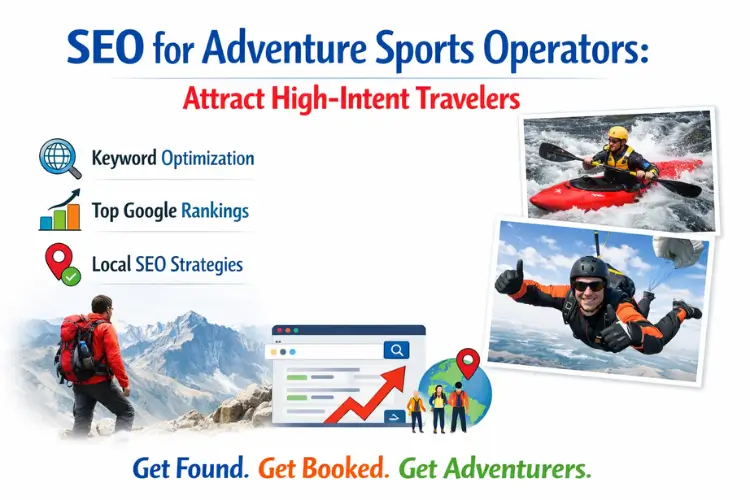
Adventure trips get booked when people can quickly find the right activity, feel confident about safety, and see clear details like location, timing, and price. Search engines reward businesses that make this easy, with pages that match what travelers are looking for and answer the common questions without extra steps. Good SEO for adventure sports is a mix of clear activity pages, local signals, strong trust details, and steady updates based on real searches. When all of that is in place, rankings and bookings grow together.
- SEO for Adventure Sports Operators: Attract High-Intent Travelers and Turn Search Traffic into Real Bookings
- 1. Set up your SEO goals around real bookings
- 2. Know how customers search for adventure activities
- 3. Build pages that rank and convert for each activity
- 4. Win local searches with location-first SEO
- 5. Fix technical SEO so your site is fast, clear, and easy to crawl
- 6. Create content that attracts high-intent visitors and builds trust
- 7. Turn organic traffic into bookings with conversion-focused SEO
- 8. Important link building for adventure operators without spam
- 9. Important trust signals that improve rankings and bookings
- 10. Keep improving with SEO measurement and routine maintenance
1. Set up your SEO goals around real bookings
SEO works best when it supports how your business actually runs: your guides, your capacity, your schedule, and your best-selling trips. Before changing pages or writing content, decide what a good booking journey looks like for each activity you offer. This keeps your website focused on actions that bring revenue, not just traffic. With clear goals, it becomes easier to choose keywords, plan pages, and track what is working in a simple way.
1.1 Define the booking actions you want searchers to take
Start by listing the actions that lead to money in your business. For many adventure operators, the main action is a confirmed booking, but it can also be a deposit, a call, a WhatsApp message, or a form submission for custom trips. Choose one primary action per activity page so the page feels clear and not scattered.
Then map the steps a customer takes before booking. For example, someone looking for river rafting may check difficulty level, pickup point, age limit, and timing before they pay. If your page supports these steps smoothly, people stay longer, click more, and book more, which also supports better rankings over time.
1.2 Match goals to your seasons and capacity
Adventure sports often have seasons, weather windows, and limited slots, so your SEO goals should reflect that. If paragliding runs best from October to March, your website should push bookings strongly during that period and collect leads during off-season months. Your goals can change slightly across the year, and that is normal.
Also match goals to capacity. If you only run one canyoning batch per day, you do not need broad traffic for every keyword. You need the right traffic that fits your schedule, location, and pricing. This mindset keeps your SEO practical and focused on bookings you can actually serve.
1.3 Important pages that drive revenue
Most adventure websites have a few pages that do the real work: the main activity pages, a pricing or packages section, and the booking or contact flow. These pages deserve the most attention because they directly influence conversions and also attract the strongest search intent. Treat them as your “money pages” and improve them first.
A simple example is a trekking operator who offers three signature treks. Instead of spreading details across many short pages, create one strong page for each trek with all essential information. When these pages are complete and easy to trust, they earn links, rank for more keywords, and convert better than thin pages.
1.4 Decide what success looks like in numbers
Choose a few numbers that you can check weekly without feeling overwhelmed. A practical set is: organic bookings per week, organic leads per week, and the top 10 pages by organic visits. If you want one more, track the top 20 search queries bringing clicks. Keep it simple so you actually use it.
It also helps to set realistic targets per season. For example, you may aim to increase organic bookings for rafting weekends by 20% over three months. When your target is tied to a real trip type and time frame, it becomes easier to judge whether the SEO work is paying off.
1.5 Create a simple tracking plan
Tracking is useful when it is easy, consistent, and tied to your goals. Set up basic conversion tracking in your analytics so that bookings, lead forms, calls, or WhatsApp clicks are recorded. If you use a booking engine, check whether it supports tracking for completed purchases or confirmations.
For search performance, Google Search Console is enough for most operators to start. It shows which queries bring clicks, which pages rank, and where you are close to page one. A weekly habit of checking Search Console for 15 minutes helps you spot quick wins and fix pages that are dropping.
2. Know how customers search for adventure activities
People rarely search the way operators name their packages. They search based on place, timing, group type, and comfort level, and they often want quick reassurance about safety and logistics. Good SEO starts with understanding those patterns and building your pages around them. When your website matches how customers search, you rank for more relevant queries and attract visitors who are already close to booking.
2.1 Start with the intent, not the sport name
Many searches are not simply “rafting” or “paragliding.” They are “rafting near Rishikesh for beginners,” “paragliding cost in Bir,” or “best trekking route for first-time trekkers.” The sport is only one part of the search. The intent is what matters, like beginner-friendly, family-safe, weekend plan, or budget trip.
Write down the common intents you hear on calls and messages. People ask about fear, fitness, safety, photos, and time needed. When you reflect those intents in your content and headings, you match what searchers want, and your page feels immediately relevant.
2.2 Build a keyword list around locations and trip types
Adventure businesses usually win by owning a location plus activity combination. You want to be found for “activity + place” and also for nearby areas people use in searches. For example, a rafting operator may target Rishikesh, Shivpuri, and “near Dehradun” searches, depending on how customers describe the area.
Also include trip types like “one day,” “half day,” “weekend,” “sunrise,” or “private group.” These phrases help you attract people who already know what kind of plan fits their schedule. A small, thoughtful keyword list built around your actual services often outperforms a giant list that does not match your offerings.
2.3 Important modifiers: price, difficulty, age, duration
Modifiers are words that show someone is closer to booking. Price terms like “cost,” “package,” and “best price” often bring high-intent visitors, as long as your page answers pricing clearly. Difficulty terms like “beginner,” “easy,” “moderate,” and “advanced” matter a lot in adventure sports because people want to feel safe and prepared.
Age and duration also matter. Families search “rafting for kids” or “safe trekking for children,” while working groups search “2 day trek” or “half day ATV ride.” Add these modifiers naturally to your pages, but only if you truly offer those options. Accuracy builds trust and reduces cancellations.
2.4 Use Google Search Console to find real queries
Instead of guessing keywords forever, use Google Search Console to see the exact searches where you already appear. Look at the queries for each activity page and notice patterns. You may find that people are searching “best time,” “distance,” “safety,” or “height limit,” and your page may not mention those clearly yet.
A practical way to use this is to pick one page per week and improve it based on Search Console queries. If you see “rafting timing Rishikesh” bringing impressions, add a small section about reporting time, trip duration, and return time. These updates are small but they align your page with real demand.
2.5 Group keywords into pages so you do not compete with yourself
When two pages target the same keyword, they compete and neither performs as well as it could. This happens often when operators create many similar package pages with tiny differences. Instead, group related keywords under one strong page whenever possible. One excellent page that covers all key details can rank for many long-tail queries.
For example, if you offer “beginner rafting” and “family rafting” on the same stretch and timing, combine them into one “Rafting in [Location]” page with clear sections for beginners and families. Keep separate pages only when the trip is truly different, like a different river grade, a different route, or a multi-day version.
2.6 Plan for seasonal keywords and last-minute searches
Adventure bookings are often seasonal and weather-driven, so search behavior changes across months. In peak season, people search “best rafting in May” or “paragliding open now,” while in shoulder seasons they search “best time” and “is it safe in monsoon.” Your content should reflect these patterns honestly.
Last-minute searches are also common, especially for weekend trips. Phrases like “today,” “tomorrow,” “near me,” and “open now” show strong intent. You can support these searches by keeping your key pages updated, adding clear availability or batch timings, and maintaining strong local signals so search engines trust your business details.
3. Build pages that rank and convert for each activity
Adventure sports SEO is not only about being found, it is about being chosen. A page can rank and still fail to convert if it feels unclear, missing details, or hard to trust. Your activity pages should feel like a helpful conversation that answers the real questions: what it is, who it is for, how safe it is, what it costs, what to carry, and how to book. When you build pages this way, rankings and bookings support each other.
3.1 Create one strong landing page per core activity
Each core activity should have a dedicated page that acts as the main destination for search traffic. This page should cover the activity in that location fully, not in a thin way. If you offer rafting, trekking, and camping, create a strong page for each, instead of mixing everything into one general page that feels vague.
A strong landing page can also support smaller variations inside it. For example, a trekking page can include sections for “weekend trek,” “family-friendly trek,” and “sunrise trek” if they are part of the same base offering. This keeps your site organized and helps search engines understand which page should rank.
3.2 Write titles and meta descriptions people actually click
Your page title is one of the first things people see in search results, so write it for clarity and intent. Include the main activity and the main location, and add a small trust or value cue like “pricing,” “batches,” or “licensed guides,” as long as it is true. Keep it readable, not stuffed.
Meta descriptions do not directly control rankings, but they influence clicks, and clicks influence performance over time. Mention the key details people care about: difficulty level, duration, starting point, inclusions, and booking option. A simple line like “Beginner-friendly rafting trips with certified guides, clear pricing, and daily batches” often works better than generic marketing lines.
3.3 Use clean headings and on-page copy that answers doubts
Your headings should mirror how customers think. Use clear sections like “Route and duration,” “Difficulty and fitness,” “Safety and guides,” “What is included,” and “How to reach.” These headings help people scan quickly, and they also help search engines understand your content.
Keep the writing natural and specific. Replace vague lines like “best experience guaranteed” with real details like river grade, flight time, trek altitude, or group size. People book when they feel informed, and search engines also prefer pages that provide clear, useful information.
3.4 Add trust signals: safety, guides, permits, insurance
Adventure sports need trust, and your page should show it without sounding dramatic. Mention guide certifications, safety briefings, equipment standards, and any permits required for the activity. If you follow recognized practices, explain them in simple language so a first-time customer feels comfortable.
You can also add proof in a practical way, such as “All participants receive a safety briefing and helmet fitting before the ride” or “Guides carry first-aid kits and have route communication.” These details reduce pre-booking hesitation and also reduce last-minute questions on calls.
3.5 Show pricing and availability without hiding details
People search for pricing because they want to plan, not because they are trying to bargain. If your page avoids pricing completely, many visitors leave and search for another operator who is more transparent. You do not need to list every possible custom price, but you should provide a clear starting price, what it includes, and what changes the price.
Availability is similar. If you have fixed batch times, list them. If availability changes daily, share a simple pattern like “morning and afternoon slots” and guide visitors to the booking step for exact dates. Clarity helps conversions and reduces back-and-forth messages.
3.6 Add internal links that lead to booking
Internal links guide visitors and also help search engines understand your site structure. On each activity page, link to related helpful pages like “How to reach,” “Safety policy,” “Cancellation policy,” or “Frequently asked questions.” These links keep people on your site longer and reduce doubts that stop bookings.
Also link to your booking step in a clear way. Use buttons and simple text links that match how people think, like “Check slots for this weekend” or “Book your batch.” Keep the path to booking obvious, especially on mobile, because many adventure searches happen on phones during travel planning.
4. Win local searches with location-first SEO
Local SEO matters because most adventure activities are booked close to where people are staying or planning to travel. Search engines look for clear business details, consistent location signals, and strong proof that real customers trust you. When your local information is accurate across your website and listings, you show up more often for “near me” and “in [place]” searches, and people feel confident choosing you quickly.
4.1 Set up and polish your Google Business Profile
Your Google Business Profile often becomes the first impression, even before people reach your website. Fill in the core details like categories, service areas, timings, phone number, and website link, and keep them consistent with your site. Add a short business description that matches your main activities and your main location, using simple words.
Add photos that show the real experience, like safety gear, briefing areas, vehicles, and group shots at common spots. A few fresh photos each month helps because it shows the listing is active. If you run multiple locations, create separate profiles only when they are real, staffed locations with clear signage and consistent operations.
4.2 Keep your name, address, and phone consistent everywhere
Search engines cross-check your business details across directories and platforms. If your address is written one way on your website, another way on a directory, and a third way on social profiles, trust signals get weaker. Keep your name, address, and phone number written in one standard format everywhere you control.
Put the same details in your website footer and on a contact page, and use the same phone number you actually answer. If you shift offices or pickup points seasonally, keep the registered address stable, and explain pickup locations on your activity pages. This helps you stay consistent while still being honest about how trips work.
4.3 Create location pages for pickup points and nearby hubs
Adventure operators often serve travelers from a few popular hubs like a main town, a resort belt, or a common meeting point. Create short, useful pages for these hubs that answer practical questions like how far the pickup is, what transport options work, and what time people should plan for. These pages can rank for searches like “rafting pickup Shivpuri” or “canyoning near [town].”
Keep these pages genuinely helpful and not repetitive copies. Include a simple map embed, clear directions, and a short list of nearby landmarks people recognize. A trekking operator, for example, can create a “How to reach the base camp from [town]” page and link to it from all trek pages.
4.4 Build local links that make sense for your business
Links from local and travel-relevant websites can help your visibility, but the best links come from real relationships. Partner pages from homestays, hostels, hotels, travel clubs, and local tourism blogs often fit naturally. If you offer referral discounts or shared packages, ask partners to link to the specific activity page that matches the offer.
Local event pages also help. If you support a cleanup drive, a trail restoration day, or a safety workshop, request a mention and link from the organizer’s site. These links are not about volume, they are about being connected to your real area and community in a way search engines can understand.
4.5 Use reviews as a steady SEO asset
Reviews influence both rankings and bookings because they show proof from real customers. Ask for reviews in a simple way after the trip, ideally when guests are still happy and have photos. A short message with a direct review link works well, and it feels easy for people to complete.
Respond to reviews with care and consistency. Mention the activity and location naturally, like “Glad you enjoyed the rafting stretch near Shivpuri,” without forcing keywords. Over time, this builds a strong profile that helps you show up more often and helps customers choose you faster.
4.6 Add local cues on your website without stuffing words
Your website should make it obvious where you operate and where the experience happens. Add clear location cues in headings, image captions, and short lines inside key sections like “meeting point,” “how to reach,” and “nearby stays.” Keep it natural and tied to real information, not repeated phrases.
A simple example is a paragliding page that includes “takeoff point,” “landing point,” and “drive time from the main market” in a short section. These details help search engines connect you with location searches, and they also reduce customer confusion, which improves conversions.
5. Fix technical SEO so your site is fast, clear, and easy to crawl
Technical SEO makes sure search engines can access your pages and understand them, and it makes sure users have a smooth experience on mobile. Many adventure sites lose bookings because pages load slowly, buttons are hard to tap, or important information is buried. Small technical improvements usually bring quick results because they reduce drop-offs and help search engines trust your site quality.
5.1 Make mobile experience your first priority
A large share of adventure searches happen on phones, often while people are traveling. Check your activity pages on a phone and notice if the pricing, timings, and booking button are easy to see. If people need to pinch, zoom, or scroll too much before they understand the trip, they often leave.
Keep the booking button visible and place important details high on the page. Use readable font sizes, clear spacing, and short sections with headings so scanning feels easy. A simple mobile-friendly layout often improves both rankings and conversions because users stay longer and interact more.
5.2 Improve page speed with simple fixes
Speed matters because people compare operators quickly and do not wait long for heavy pages. Compress large images, avoid uploading oversized photos, and use modern formats if your website supports them. Keep unnecessary scripts and plugins limited, especially if they slow down your booking pages.
If you want a quick check, Google PageSpeed Insights can point to common problems like large images or unused code. You do not need to chase a perfect score, but you should aim for a site that loads smoothly on average mobile connections. Faster pages also reduce ad spend waste if you run campaigns later.
5.3 Keep your site structure clean and predictable
A clean structure helps both search engines and customers. Your main menu should lead to core activities, key locations, and essential trust pages like safety and policies. Avoid having many similar pages with slightly different names, because it creates confusion and splits ranking signals.
Use simple URLs that match the page topic, like /rafting-rishikesh/ instead of long strings with numbers. Group related content under clear sections, like a trekking category that links to individual trek pages. This structure helps search engines crawl your site and helps visitors find what they want without extra steps.
5.4 Use proper indexing signals and avoid duplicate pages
Sometimes pages do not rank because search engines are unsure which version to index. This can happen when the same page exists with and without “www,” or when filters and parameters create multiple versions. Set one preferred version and make sure the other versions redirect properly.
Check your indexed pages in Google Search Console and look for duplicates, excluded pages, or “crawled but not indexed” patterns. If you have many near-identical package pages, combine them into a stronger single page where possible. This improves clarity and helps one page gain authority instead of many pages competing.
5.5 Add structured data for activities, reviews, and FAQs
Structured data helps search engines understand your content in a more precise way. For adventure operators, FAQ structured data can be especially useful because it matches common questions like age limits, fitness level, and what to carry. Review and local business structured data can also support trust signals when implemented correctly.
Keep the information accurate and consistent with what users see on the page. If you add FAQ sections, make sure the answers are visible on the page and not hidden. A developer can add this cleanly, or some website platforms support it with built-in settings, but the key is accuracy and clarity.
5.6 Run regular audits with a crawling tool
A crawling tool helps you spot broken links, missing titles, duplicate headings, and redirect issues. Screaming Frog is one commonly used option for quick site audits, and it is useful because it gives a clear list of what needs attention. You do not need to run it daily, but a monthly check is often enough for small to medium sites.
After each audit, fix the high-impact items first. Broken booking links, missing meta titles on key pages, and pages that return errors should be handled quickly. Technical SEO becomes easy when you treat it like routine maintenance, the same way you check gear before a batch.
6. Create content that attracts high-intent visitors and builds trust
Content for adventure sports SEO is not about writing long stories for the sake of it. It is about answering the exact questions people search before they book, and doing it in a way that matches your real operations. When your content is practical, location-specific, and connected to your activity pages, it brings visitors who are close to booking and helps your main pages rank better.
6.1 Build topic clusters around each activity
A topic cluster is a simple way to organize content so search engines see you as a strong source on one activity in one location. Start with your main activity page as the center, then create supporting pages that answer key questions. For rafting, supporting pages could cover “best time,” “river grades,” “what to carry,” and “how to reach the start point.”
Link these supporting pages back to the main activity page, and also link between them when it makes sense. This makes your site feel complete and connected. Over time, the cluster approach helps you rank for many long-tail searches, and the main page gains strength from the supporting content.
6.2 Write FAQs based on real calls and messages
The best FAQ ideas come from what customers already ask you. Use your call logs, WhatsApp chats, and booking questions to build a list. Questions like “Is it safe for beginners,” “Can kids join,” “What if it rains,” and “Do we get photos” are common and worth answering clearly.
Keep answers short, honest, and practical. Mention what you actually do, like a safety briefing or alternate timing, instead of vague promises. Add these FAQs to your activity pages and also consider a separate FAQ page for each activity if you have many questions, so you can cover them without making one page too long.
6.3 Create “how to prepare” pages that reduce cancellations
Preparation content brings high-intent visitors and also improves trip quality. Pages like “What to wear for canyoning,” “Fitness tips for a weekend trek,” or “What to carry for rafting” help people feel ready. When guests come prepared, the trip runs smoother and reviews often improve naturally.
Keep preparation pages grounded in your actual conditions. Mention the season, water temperature, altitude, or trail type if relevant. Include a simple checklist and link back to the booking page so visitors can move forward when they feel confident.
6.4 Use simple examples and mini itineraries
People love examples because they make planning easier. Add mini itineraries like “half-day plan,” “weekend plan,” or “family plan” within your content. For example, a rafting page can show a simple timeline: arrival time, briefing, river time, and return.
Examples also help you include useful keywords naturally. A trekking operator can write a “2-day trek plan from [town]” that includes travel time, meal stops, and rest breaks. This content feels helpful, matches real searches, and brings visitors who are already imagining the trip.
6.5 Refresh old content so it stays accurate and ranks longer
Adventure details change with seasons, rules, routes, and timings, so content needs updates. Refresh key pages before peak season by checking pricing, batch times, pickup points, and inclusions. Even small updates can improve rankings because search engines notice that your page stays current.
Use Google Search Console to see which pages are losing clicks and review their queries. If a page ranks for “best time for paragliding” but does not clearly mention month ranges, update it with a short, accurate season section. Regular refreshing is easier than writing everything from scratch.
6.6 Add helpful visuals and keep them SEO-friendly
Photos and short videos help people trust the experience, especially for first-timers. Use real images from your trips, showing equipment, guides, and typical group sizes. Add simple file names and alt text that describe the image clearly, like “rafting-helmet-safety-briefing” or “trekking-trail-viewpoint.”
Keep visuals optimized so they do not slow down the page. Compress images and avoid uploading huge files directly from a phone without resizing. Visuals help bookings most when they support understanding, like showing the meeting point, the kind of raft used, or the terrain level on a trek.
7. Turn organic traffic into bookings with conversion-focused SEO
Ranking is useful when the visitor can understand the trip fast and book without confusion. Adventure sports websites often lose bookings because the booking path feels unclear, the details are scattered, or the next step is not obvious on mobile. When you shape pages around simple decisions like date, batch time, and group size, people move from search to payment with less hesitation. Conversion-focused SEO keeps the page helpful for search engines and practical for real guests.
7.1 Place the booking step where people naturally decide
Most visitors decide in the first minute if the trip fits them. Put the key decision details near the top: starting price, duration, difficulty, meeting point, and next available batch pattern. Keep the booking button close to these details so the next step feels natural.
When someone scrolls, repeat the booking option again after sections like safety and inclusions. This is helpful because people often want reassurance before they book. A second booking button after the trust details catches guests at the moment they feel ready.
7.2 Keep forms short and remove friction
Adventure bookings should feel quick, especially for short activities like rafting, ATV, zipline, or a day hike. Ask only for what you truly need to confirm the slot, like name, phone, date, and number of people. Extra fields can wait until after payment or after the booking is confirmed.
If you take bookings through WhatsApp or calls, make that option clear but not distracting. A simple line like “Need help choosing a slot, message us” works well. The page stays focused, and people who want quick guidance still have an easy way to reach you.
7.3 Important information should appear before the user asks
Adventure customers often worry about safety, age limits, and fitness level, even if they do not say it directly. Add a short section that answers these clearly in simple language. Mention typical participant profiles like beginners, families, or first-timers if you serve them.
Also place clarity around weather and rescheduling. A calm, practical explanation of what happens in rain or poor conditions reduces hesitation. When people see that you have a clear process, they trust you more and book with fewer doubts.
7.4 Use clear calls to action that match how guests think
Avoid vague buttons like “Submit” or “Get started.” Use phrases that match the decision the guest is making, like “Check available slots,” “Reserve your batch,” or “Book for this weekend.” Keep the wording simple and consistent across the page.
If you have multiple packages, present them in a clear table or card layout. Show what changes between options, like river grade, duration, or inclusions. When guests can compare quickly, they spend less time confused and more time moving toward booking.
7.5 Add proof close to the booking decision
Proof helps most when it sits near the moment of action. Place a small review snippet, a safety note, or a guide credential line close to the booking button. Keep it short so it supports the decision without distracting from the booking flow.
If you have a photo that shows safety briefing or equipment, place it near the trust section. Real visuals often feel more convincing than long claims. Guests book faster when they can picture what will happen and who will be guiding them.
7.6 Check user behavior with a simple tool and adjust
Sometimes the best improvements come from watching how people use your page. A tool like Microsoft Clarity can show where visitors stop scrolling, where they click, and where they get stuck. This helps you spot simple fixes like moving pricing higher or making the booking button more visible.
Use the insights to make small changes, then watch results for a couple of weeks. A good example is when visitors keep clicking an image of the meeting point, expecting a map. Adding a map link there can increase clicks to the booking step because the page now matches user expectations.
8. Important link building for adventure operators without spam
Links still matter because they act like trust signals from other websites. For adventure sports, the best links usually come from travel communities, local partners, and real stories where your business is mentioned naturally. You do not need hundreds of links, you need the right ones that match your location and your activities. When link building is tied to real relationships, it supports rankings and also sends referral bookings.
8.1 Focus on partners that share the same customers
Think about who serves the same traveler before or after your activity. Hostels, homestays, hotels, travel desks, taxi operators, outdoor gear stores, and local cafes often meet your guests daily. Offer a clear partnership arrangement like referral codes, bundled packages, or simple guest support, and ask for a link from their website.
Link to partners too when it makes sense. A short “stay options nearby” section with a few trusted partners can be helpful for guests. When both sides support each other, links feel natural and stay live for years.
8.2 Important links often come from local story pages
Local websites that publish community stories, event coverage, or tourism updates can be strong link sources. If you run a safety workshop, support a local cleanup, or help with trail restoration, ask for a mention on the organizer’s site. These links look genuine because they come from real-world activity.
Keep the ask simple and specific. Share the exact page you want them to link to, like your trekking page or your rafting page, not just the homepage. This helps search engines connect the link to the exact service you want to rank.
8.3 Get listed on quality travel and adventure directories
Some directories are useful because travelers actually use them, and search engines recognize them too. Choose a few reputable ones that match your region and activity type, and keep your listing consistent. Avoid low-quality directories that look spammy or irrelevant.
When you add listings, include clear photos, correct contact details, and a short description that matches your real offer. A listing that looks complete can send direct bookings, not just SEO value. Treat it as a customer-facing page, not a checkbox task.
8.4 Use content to earn links naturally
Helpful content can attract links when it is specific and practical. A page like “River rafting grades explained for beginners in [location]” or “Complete packing list for a weekend trek from [base town]” can earn mentions from travel bloggers and community groups. These links often come slowly, but they are steady and meaningful.
Make the content easy to reference. Add clear headings, short explanations, and a simple checklist. When someone writes about travel planning, they can link to your checklist as a helpful source, and your page gains authority over time.
8.5 Use outreach in a respectful and targeted way
Outreach works best when you contact people who already write about your area or your sport. Read their content first and offer something useful, like updated route information, safety tips, or season timing. Avoid generic messages asking for a link with no value.
A simple approach is to share a helpful resource page and suggest it as a reference for their readers. If it truly fits their content, some will link. Even when they do not, the relationship can still lead to partnerships or referral bookings.
8.6 Avoid link shortcuts that can hurt long-term rankings
Paid link networks, random guest posts on unrelated sites, and bulk directory submissions can create problems later. Search engines are good at spotting patterns that look unnatural. For an adventure operator, trust is part of the product, so your SEO should reflect that.
If you are unsure about a link opportunity, ask a simple question: would this help a real traveler decide and book. If the answer is yes, it is usually a safer and better link. If it feels only like an SEO trick, it is better to skip it.
9. Important trust signals that improve rankings and bookings
Adventure sports buyers want to feel safe and informed, and search engines also want to rank businesses that look reliable. Trust signals are the details that show you are real, experienced, and transparent. When trust is clear on your website, people stay longer, ask fewer questions, and book with more confidence. This also improves performance in search because user behavior and brand signals become stronger.
9.1 Show clear guide credentials and experience
If your guides have certifications, training, or years of experience, share it in a simple way. Add a short guide section with a photo, a one-line credential, and what they handle during the trip. This makes the experience feel human and professional.
Keep it honest and specific. A line like “Guides are trained in river safety and first aid” is clear and helpful. When guests see who is responsible for their safety, they feel calmer and more ready to book.
9.2 Use real photos that match the actual experience
People can sense when photos are stock or unrelated. Use real photos from your batches that show equipment, guides, briefing moments, and typical group sizes. These images reduce doubt because guests can picture the environment and the process.
Add short captions or alt text that describe what the photo shows. For example, “helmet fitting before rafting” or “trek group at the first viewpoint.” These details support SEO gently while also helping guests understand what to expect.
9.3 Important safety details should be easy to find
Safety information should not be hidden in long policy pages only. Add a simple safety section on each activity page that explains the briefing, equipment checks, and basic rules. Mention what you provide and what guests must follow, like wearing a helmet or staying with the guide.
Also include what happens in common scenarios, like sudden weather change or route closure. Keep the tone practical and calm. Clear safety details build trust and reduce last-minute cancellations and refund disputes.
9.4 Strengthen your policy pages and make them readable
Policies are part of trust because they show how you handle changes and fairness. Create clear pages for cancellation, rescheduling, refunds, and safety guidelines. Use simple language and short paragraphs so guests can understand quickly.
Link to these policies from activity pages near the booking area. When guests see the policy before paying, they feel safer. This also reduces support effort later because people know the rules upfront.
9.5 Improve your review strategy and keep it consistent
Ask for reviews at the right time, usually after the trip when guests are happy and have photos. Keep the request short and personal, and make it easy with a direct link. Over time, steady reviews build a strong base that supports local rankings and conversions.
Respond to reviews thoughtfully. Mention the activity and location naturally, and thank guests for specific feedback. This shows future customers that you are active and reliable, and it keeps your online presence healthy.
9.6 Add simple signals of legitimacy and contactability
Guests feel safer when they can reach you easily. Show your phone number, operating hours, and pickup coordination method clearly. Add your full business address if you have one, and include a map on the contact page.
If you are registered with any local tourism body or have permits where required, mention it briefly. Do not overload the page with logos, but one or two real signals can help. People book faster when they feel they can contact you and verify details quickly.
10. Keep improving with SEO measurement and routine maintenance
SEO becomes easier when it is treated like regular upkeep, similar to checking gear and routes. Small checks each week protect your rankings and help you grow steadily without big rebuilds. Measurement also helps you avoid guessing, so you spend time on the changes that actually bring bookings. A simple routine makes your SEO stable across seasons and competition.
10.1 Important numbers to track every week
Pick a small set of metrics you can review quickly. Track organic bookings or leads, organic visits to your main activity pages, and the top search queries bringing clicks. This is enough to spot whether the right pages are improving.
Keep notes in a simple sheet with dates and observations. For example, “rafting page clicks up after adding batch times” or “trek page dropped after price update.” These notes help you learn what works in your specific business context.
10.2 Use Google Search Console to plan page updates
Search Console shows what queries you already rank for and where you are close to better positions. Look for queries with high impressions and lower clicks, because those often need better titles, clearer content, or a more relevant section. Update pages based on real demand instead of guessing.
A practical habit is to pick one activity page every two weeks and improve it. Add a short section that answers the most common missing query, like “best time,” “how to reach,” or “fitness level.” Over time, these small upgrades add up and keep your site ahead.
10.3 Watch competitors to find content gaps
Competitor research is useful when you treat it as a way to spot gaps, not copy. Search for your main activity keywords and notice what top pages include that yours does not. It might be clearer pricing, better route details, or stronger FAQs.
Then improve your page in your own voice using your real process. For example, if competitors list meeting points clearly and you do not, add a simple meeting point section with timings. When you fill gaps with real details, your page becomes more complete and more likely to outrank others.
10.4 Keep content accurate before peak season
Adventure details change with seasons, weather, and rules, so do a pre-season update of your main pages. Check pricing, inclusions, batch timings, pickup points, and safety notes. Even small corrections can improve trust and reduce support calls.
Also update photos if you can. A few recent images signal that your operations are current. Guests feel more confident booking when the page looks active and aligned with the current season.
10.5 Fix drops quickly with a simple troubleshooting list
If a page drops in rankings, start with the basics. Check if the page is still indexed, if the title changed, if the booking link is working, and if the page got slower due to new images or scripts. Look for obvious technical issues first because they are often the cause.
Then check if competitors updated their pages or if search intent shifted. Sometimes a query moves toward “price” or “timings,” and your page needs clearer answers. Small content adjustments based on real search behavior often recover clicks.
10.6 Build a steady monthly SEO routine
A simple routine keeps you consistent without stress. Each month, audit broken links and page titles, refresh one or two key pages, request a few new reviews, and publish one helpful supporting page. This keeps your site growing while protecting what already works.
If you have limited time, prioritize the pages that bring bookings. Improving one rafting page that converts is usually better than writing five generic posts. Consistent small actions create stable rankings and steady bookings across the year.