
SEO for Boutique Travel Agencies: Get Found Travelers at the Right Time
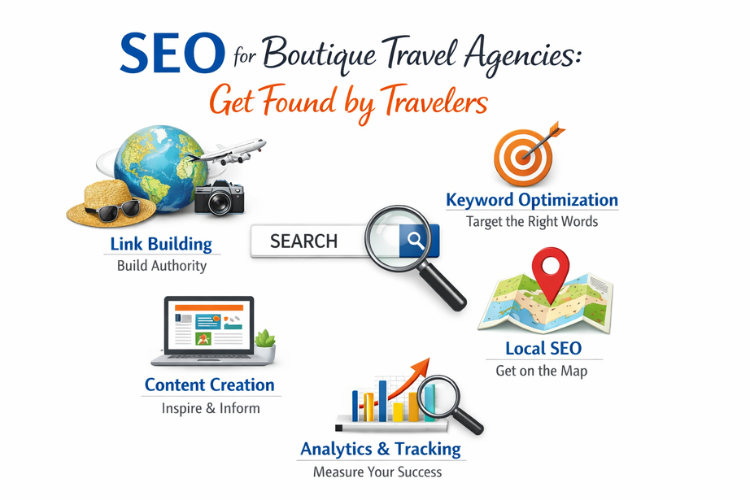
Boutique travel agencies grow when the right travelers find the right experience page at the right time. Search helps people discover private walks, local meals, craft visits, calm day trips, and special stays that match their taste. Good SEO makes your offers clear, easy to trust, and easy to act on. When each page answers real planning questions, you get fewer random inquiries and more people who are ready to book.
- SEO for Boutique Travel Agencies: Get Found Travelers at the Right Time
- 1. Know your ideal traveler and how they search
- 2. Choose keywords for experiences that people book
- 3. Write experience pages that rank and convert
- 4. Create destination pages that act like planning hubs
- 5. Use local SEO to build trust and quick inquiries
- 6. Build a blog that supports your experience sales
- 7. Technical SEO basics for small boutique sites
- 8. Earn links and mentions through real partnerships
- 9. Measure results and improve month by month
1. Know your ideal traveler and how they search
SEO works better when you write for a clear kind of traveler instead of everyone. Experience buyers often search with details like budget level, comfort needs, group type, and timing. When you understand those patterns, you can shape your pages to match the words people use. This makes your site feel more personal and also easier for search engines to understand.
1.1 List the traveler types you serve best
Write down 3 to 5 traveler types you often book, like couples, families, solo travelers, or small groups. Add one line for what they care about most, such as privacy, safety, food preferences, or an easy pace. This keeps your content focused and helps you choose the right topics.
Use those traveler types to guide page wording. A couple looking for romance searches differently than a family with kids. Small wording changes matter, like “easy walking” or “short stops.” When your pages match the real needs, the inquiry forms feel like a natural next step.
1.2 Notice how travelers describe the same thing
People use simple phrases like “quiet places,” “local guide,” “safe area,” or “not too crowded.” These phrases often appear in emails and WhatsApp chats. Collect them in a note so you can reuse them in headings, FAQs, and page copy.
You can also check reviews, chat logs, and common questions from calls. If many people ask about pickup, timing, or food options, those are also search terms. When you reflect real language, your pages sound helpful and rank for more specific searches.
1.3 Map the main questions before someone books
Most people ask similar questions before they pay. They want to know what happens, how long it takes, where it starts, what is included, and what can be changed. These questions can become headings on your experience pages and destination pages.
When the answers are clear, people spend more time on the page and feel calmer about reaching out. This is also good for SEO, because search engines see that visitors are getting what they came for. Clear answers reduce back and forth and improve lead quality.
1.4 Pick one main goal for each page
Each page should have one main job. An experience page should help someone choose and book that experience. A destination page should help someone plan and then move to the best experience pages. A blog post should help with ideas and lead readers toward relevant pages.
This focus also prevents keyword overlap. If two pages try to rank for the same phrase, both can stay stuck. When every page has a clear role, your internal links become cleaner and your site feels organized. A small site can still rank well with clear purpose.
1.5 Keep your brand voice calm and clear
Boutique agencies often have a warm tone, and you can keep that tone while staying clear. Use short sentences, real details, and gentle confidence. Write like you would explain the experience to a guest on a call. That voice builds trust and keeps the page easy to scan.
Consistency matters across pages. If one page sounds formal and another sounds casual, the site feels mixed. A simple style guide helps, such as using the same words for private tours, pickup, inclusions, and timing. This makes your writing faster and your SEO stronger.
2. Choose keywords for experiences that people book
Keyword work for boutique travel is about fit, not just big search numbers. People book experiences when the page matches what they imagine doing. Most searches include an activity plus a place, and often a detail like private, family friendly, or half day. When you collect these phrases and assign them to the right pages, SEO becomes easier to manage.
2.1 Start with what you already sell
Make a list of your main destinations and your main activities in each place. Turn them into pairs like “Udaipur lake walk,” “Jaipur food walk,” or “Kerala backwaters day trip.” These pairs are your core keywords because they match what you can actually deliver.
Add your special angle as a modifier, like private, small group, slow pace, or local host. These words attract travelers who fit your style and budget. Simple phrases often convert better than broad phrases. This list becomes the base for your page titles and headings.
2.2 Use simple keyword tools to expand ideas
Google Keyword Planner can help you find related phrases and see common wording. You can also type your phrase into Google and look at the suggestions and the “People also ask” questions. These sources show real search language and help you spot useful variations.
Keep the list tidy by grouping phrases under each destination. If you see “walking tour” and “heritage walk” used for the same thing, you can include both naturally on the page. You only need a few strong variations, not a long messy list. The goal is clarity and match.
2.3 Focus on long phrases with strong intent
Long phrases often bring fewer visitors, but better visitors. A search like “private Old Delhi food tour with pickup” shows strong intent and clear needs. If your page answers those needs, inquiries come faster. These phrases also face less competition than broad terms.
Use intent signals like price, book, private, best time, and itinerary. A person searching “best time for a morning market walk” may still be planning, but they are moving closer to a decision. Your page can include a small section on timing and link to the booking details.
2.4 Build a keyword to page map
Make a simple sheet with columns for keyword, target page, and page type. Pick one main keyword for each experience page. Pick broader planning keywords for destination pages. Pick question based keywords for blog posts. This stops pages from competing with each other.
Update the sheet when you add a new experience or destination. If you already have a page for “Jaipur private food walk,” keep that as the main target. A blog post can support it with related topics and internal links. This structure helps your whole site grow in a clean way.
2.5 Use search data to refine wording
Google Search Console shows which searches bring clicks and which bring impressions. This is useful because travelers may use phrases you did not expect. If a page shows impressions but low clicks, your title and short description may need clearer words.
Review the top queries for each key page once a month. Add the best fitting phrase into a heading or a short FAQ answer. These are small edits that can lift rankings over time. Search Console also shows indexing issues, which helps you fix problems early.
3. Write experience pages that rank and convert
Experience pages are your booking pages, so they need to be clear, warm, and detailed. Search engines look for obvious topic signals, like what the experience is, where it happens, and what is included. Travelers look for the same things, plus proof and reassurance. When you write with simple structure and real details, the page can rank and also sell.
3.1 Use a repeatable page layout
A repeatable layout saves time and improves quality. Start with a clear title and a short opening that states the activity, location, and who it suits. Follow with sections like highlights, itinerary, inclusions, timing, meeting point, and booking steps. This makes the page easy to scan.
Use the same order on every experience page. Visitors often compare experiences and they prefer familiar layout. Search engines also learn your structure and understand your content faster. A consistent layout helps internal links too, because similar sections appear across pages.
3.2 It is important to write clear titles and short descriptions
Your page title should name the experience and place in plain words. Add one strong detail like private host, small group, or hotel pickup if it is true. Keep it simple so people know what they are clicking. A clear title improves clicks and helps rankings.
Your short description in search results should explain the value in one or two sentences. Mention duration and one key highlight, like a local meal, a hidden lane, or a calm viewpoint. This helps the right travelers click and reduces mismatched leads. A good match improves engagement.
3.3 Add real details that answer booking questions
People want to know what happens step by step. Give a simple outline of the route or flow, like where you start, the main stops, and where you end. Add timing and pace, such as “easy walk with breaks” or “short drives between stops.” These details build trust.
Include practical notes like what to wear, what to carry, and weather tips. If you offer custom changes, explain what can change and what stays fixed. When the rules are clear, conversations stay smoother and cancellations reduce. Clear expectations also lead to better reviews.
3.4 Use headings that match common questions
Headings should read like the questions people ask on a call. Good examples are “What you will do,” “Who this is best for,” “What is included,” and “Meeting point and pickup.” These headings help readers skim and help search engines understand sections. Clear headings improve page usefulness.
Add a small FAQ near the end with 5 to 7 real questions. Keep answers short and honest. FAQs can help you appear for question searches and also reduce repetitive messages. They also show that you understand traveler concerns. That helps with trust and conversions.
3.5 Strengthen internal links from each experience page
Internal links guide visitors and help search engines see your best pages. From each experience page, link to the destination page and to two or three related experiences. For example, a morning food walk can link to a cooking session or a craft visit in the same city.
Use link text that names the activity and place, like “private Jaipur bazaar walk.” This is clearer than “learn more.” Internal links also help you bundle experiences into a full day or a multi day plan. That often increases booking value and makes planning feel easier.
4. Create destination pages that act like planning hubs
Destination pages help you rank for broader searches and guide readers toward your best experiences. A good destination page feels like a friendly local overview with clear next steps. It can cover who the destination suits, the best areas, timing, and common trip shapes. When done well, it supports many experience pages and builds your authority for that place.
4.1 Set a clear focus for each destination page
Decide what the destination page is really about. It can be a city, a region, or a theme like “Goa for calm stays and local food.” Keep the scope tight so the page stays useful. A page that tries to cover everything becomes vague and hard to rank.
Add a short summary near the top with who it suits and the best trip length. For example, “Best for couples and culture lovers, ideal for 2 to 3 days.” This helps travelers self select quickly. It also makes the page easier for search engines to categorize and rank.
4.2 Add sections that reflect how people plan
Include simple planning sections like best time to visit, how to get around, and which areas to stay in. Add one paragraph for each topic and keep it practical. Travelers often search these questions and land on destination pages. When you answer clearly, they stay longer.
Add a short list of your top experiences in that destination with links. Keep it curated, like 4 to 8 experiences. Each link should go to a dedicated experience page. This turns planning traffic into booking traffic. It also spreads authority through your site in a natural way.
4.3 Use local place names in a natural way
Destination pages can include neighborhood names, landmarks, and local terms when they matter. This helps you appear for more specific searches like “Fort Kochi walk” or “South Mumbai heritage.” Use these names only where they fit the experience and route. Simple clarity beats long lists.
Add a short section like “Popular areas we cover” if you offer tours across key neighborhoods. Keep it short and link to the most relevant experiences. This supports both SEO and user trust because visitors can picture where they will spend time. It also reduces confusion during inquiry.
4.4 It is important to include proof and trust signals
Add a few real trust signals on destination pages, such as guest quotes, review snippets, or short case examples. Keep them short and specific. For example, “Family of four, half day food walk, gentle pace, vegetarian friendly.” This style feels real and helps visitors imagine themselves.
You can also mention partner quality in a humble way, like “licensed guides” or “trained drivers,” if it is true. Add links to your about page and contact page. Trust signals support conversions and can reduce bounce rate. Better engagement supports SEO over time.
4.5 Connect destination pages to blogs and guides
Your destination page should link to a few helpful blog posts, like a food guide, a packing note, or a seasonal plan. This creates a web of content around the destination. Visitors who are still planning will appreciate the extra help and stay on the site longer.
Link back from blog posts to the destination page and the main experience pages. This loop improves internal linking and helps search engines see a clear topic cluster. It also helps readers move from ideas to action. The site feels organized and helpful instead of scattered.
5. Use local SEO to build trust and quick inquiries
Local SEO helps you appear when people search for planners and tour providers in a specific place. It also builds trust because travelers often check maps and reviews before contacting an agency. Strong local presence supports both walk in style inquiries and planned bookings. A few simple steps can make a big difference for boutique agencies.
5.1 Set up and polish your Google Business Profile
Your Google Business Profile can show your agency in map results. Fill in your category, service areas, hours, phone, and website link. Add clear photos of you, your team, and real experiences. This helps people feel confident and improves your chance of getting calls.
Post updates when you add a new experience or seasonal offer. Keep the language simple and focused on what travelers get. Encourage guests to leave honest reviews and respond with a warm tone. Reviews improve trust and also influence local visibility. Consistency matters more than big bursts.
5.2 Keep your name, address, and phone consistent
Search engines compare business details across the web. Use the same name, address, and phone format everywhere, including your site, maps, listings, and social pages. Small differences can confuse the system and weaken local rankings. Consistency builds confidence.
Add your business details on your website footer and contact page. If you serve clients in multiple cities, list service areas clearly. Avoid mixing many addresses unless they are real offices. Clear, stable details support local SEO and reduce confused calls. It also helps people find you easily.
5.3 Create local landing pages for key service areas
If you actively run experiences in two or three main cities, create a page for each. Each page should explain what you offer in that city and link to the best experience pages. Keep the content unique to the city and include local details like meeting points and travel time.
These pages can rank for phrases like “private tour planner in Jaipur” or “local guide service in Kochi.” They also help travelers who already know where they are going. A clear city service page can act as a bridge between local searches and experience bookings. Keep it focused and helpful.
5.4 Build reviews the right way
Ask for reviews at the right moment, such as right after a happy experience or after a thank you message. Make it easy with a direct link and a simple request. Reviews with details like activity type and destination are especially useful because they match search terms.
Reply to reviews with short, personal notes. Mention the experience name and one small detail to show it is real. This also helps future guests feel seen. Reviews act like social proof and can improve local visibility. A steady flow is better than many reviews at once.
5.5 Add local proof on your website
Add a small section on key pages that shows local trust, like “based in,” “licensed guides,” or “local hosts,” if true. Add photos that show real places and real moments, not only stock images. Visitors often compare many agencies and look for signs of real presence.
Use simple testimonials with location details, such as “two day plan in Jaipur” or “food walk in Fort Kochi.” This kind of proof supports both conversions and SEO because it adds relevant text naturally. It also helps people feel safer. Trust is a major part of booking experiences.
6. Build a blog that supports your experience sales
A blog can bring planning traffic that later turns into bookings. The key is writing posts that connect to your experience pages and answer real questions. Each post should have a clear topic, simple structure, and a natural next step. When blog posts are linked well, they strengthen your destination pages and experience pages.
6.1 Choose blog topics that match your offers
Pick topics based on what you sell and what people ask. Good examples include “best time for a morning food walk,” “what to wear for a heritage walk,” or “two day plan for Udaipur.” These topics fit real searches and lead naturally to your experience pages.
Avoid topics that are too broad unless you can make them local and specific. A broad post like “best things to do in India” is hard to rank and hard to match to your offers. A focused post like “best craft experiences in Jaipur for first time visitors” fits your business and your site. Focus makes writing easier.
6.2 Use a simple post structure that ranks well
Start with a short opening that states what the post helps with. Then use clear headings and short sections. Include practical tips, timing suggestions, and a few examples. People like posts that help them plan, not just list places. Simple structure also helps search engines read the page.
Add internal links to one destination page and one or two experience pages. Place links where they feel natural, like after you explain a problem the experience solves. Keep the link text clear, like “private Jaipur food walk.” These links turn blog readers into inquiry leads. Over time, posts support each other.
6.3 It is important to include real examples in posts
Real examples make content feel useful and specific. For instance, you can describe a sample half day plan: “start at 9 am, market walk, tea stop, craft studio, lunch.” Keep it simple and honest. Examples help travelers picture the day and understand how your service fits.
You can also share small guest stories without personal data. A line like “a couple wanted a quiet lane walk and a calm lunch” is enough. This kind of detail builds trust and keeps readers engaged. Better engagement supports rankings over time. It also creates better inquiry messages.
6.4 Use photos and captions that add value
Photos help travel content, but they should support the text. Add captions that explain what the photo shows, like a market name, a viewpoint, or a craft detail. Captions add relevant words to the page and help readers understand context. This improves user experience.
Keep image file names simple and descriptive, like “jaipur-spice-market-walk.jpg.” Add short alt text that matches the photo. This supports image search and accessibility. Avoid stuffing many keywords into captions. Simple clarity works best and feels natural.
6.5 Update older posts and reuse them
Older posts can rank better when you refresh them. Update timing tips, entry rules, seasonal notes, and internal links. Add one new section that answers a fresh question you are seeing in inquiries. Small updates can bring new traffic without writing from scratch.
Share updated posts through email or social as part of your planning support. When readers return to the site, it signals usefulness. Use Search Console to find posts with many impressions and improve their titles and headings. This is a smart way to grow with limited time. It also keeps your blog aligned with sales pages.
7. Technical SEO basics for small boutique sites
Technical SEO sounds big, but a small agency needs only a few basics done well. A fast, clean site helps users and helps rankings. Search engines also need to find, crawl, and index your pages. When technical basics are steady, your content work performs better and you spend less time fixing issues later.
7.1 Keep your site fast and easy to use on phones
Many travel searches happen on phones, so your pages should load quickly and stay readable. Use clear fonts, enough spacing, and buttons that are easy to tap. Keep forms short and simple. A smooth mobile experience reduces drop offs and improves conversions.
Compress images before uploading so pages load faster. Use modern formats if your website system supports them. Avoid heavy sliders and too many animations. A calm, clean page keeps attention on the experience details. Speed is part of trust and part of SEO.
7.2 Use clean URLs and clear page names
URLs should be short and descriptive, like /jaipur-private-food-walk/ instead of random numbers. Clear URLs help search engines and also help users understand where they are. They look better when shared and are easier to manage in your internal links.
Keep page names consistent across your site. Use the same spelling for the destination and activity. If you use “Fort Kochi” on one page and “Fort Cochin” on another, pick one main form and explain the other in the text. Consistency supports ranking and reduces confusion.
7.3 Fix broken links and missing pages
Broken links make a site feel unreliable and can waste crawl time. Check your site every month for broken pages, missing images, and old links. A simple crawl tool can help, or your developer can run a check. Fixing basics keeps your site healthy.
When you remove a page, redirect it to the most relevant page instead of leaving a dead end. For example, an old tour page can redirect to a new version or a destination page. This keeps any earned SEO value and helps visitors reach a useful page. Clean paths improve trust.
7.4 Use index control in a simple way
Search engines should index your important pages and skip thin pages. Important pages include destination pages, experience pages, and strong blog posts. Thin pages include duplicate tag pages, internal search pages, or pages with very little content. Good index control keeps your site focused.
Google Search Console can show which pages are indexed and which have issues. If key pages are not indexed, check if they are linked from other pages and included in your sitemap. Strong internal links help indexing. A tidy site is easier to rank and easier to maintain.
7.5 Keep your site secure and stable
A secure site builds trust for guests who fill forms and make payments. Use HTTPS and keep your site system updated. Stability matters because frequent errors, downtime, or broken forms can hurt leads and hurt SEO performance. A stable site supports steady growth.
Test your inquiry form on mobile and desktop. Make sure confirmation messages are clear and emails arrive. If you use a booking tool, ensure it loads fast and works on phones. Every technical issue can lose a lead. Simple checks protect your revenue and your rankings.
8. Earn links and mentions through real partnerships
Links and mentions help SEO because they act like trust signals from other sites. Boutique agencies can earn strong links through real relationships, local partners, and useful resources. You do not need hundreds of links, you need a few good ones from relevant places. The best links come from doing good work and sharing useful content.
8.1 Start with partners who already trust you
Hotels, homestays, chefs, studios, and local guides often have websites. Ask for a simple mention with a link, such as “recommended local experience partner.” Offer to write a short description they can use. This is a fair exchange because it helps their guests too.
Keep the request specific and easy. Suggest the exact page to link to, like your destination page or a signature experience page. A link to a focused page works better than a link to the homepage. Over time, these links build your authority in that destination. They also bring warm referrals.
8.2 Create one useful local resource worth linking to
A linkable resource can be a simple, clear page that helps travelers plan. Examples include a “two day plan” page, a “local food guide,” or a “festival timing” page with practical notes. Keep it accurate, easy to read, and updated. People link to pages that save them time.
Include a short section that explains how you help travelers with that plan. Link to related experience pages gently and naturally. This keeps the resource useful and still supports your business. When a blogger or hotel shares it, you gain both traffic and SEO value. The page also becomes a long term asset.
8.3 Use guest stories in a respectful way
Guest stories can become mini case examples that others want to share. Keep details general and avoid personal data. Focus on the plan, like “three day slow travel plan with craft visit and food walk.” This kind of content is easy for partners to mention and link.
You can also publish short interviews with local hosts, chefs, or artisans. These pieces often get shared by the featured person and their community. Sharing creates natural mentions and sometimes links. The content also improves your site depth and builds trust. Real local voices fit boutique travel well.
8.4 Get listed in relevant local and travel directories
Some directories still bring value when they are relevant and trusted. Focus on quality and fit, such as local tourism associations, boutique hotel partner pages, and niche travel sites. Keep your business details consistent across listings. Consistency supports both local SEO and link trust.
Avoid low quality listings that feel spammy or unrelated. One strong local listing can help more than many weak ones. Make sure your listing points to a useful page, like your destination hub or your top experience category. This improves conversion and relevance. Relevance matters more than volume.
8.5 Build relationships with writers and creators
Travel writers, photographers, and small creators often look for reliable local partners. Offer clear information, fast replies, and honest suggestions. When a creator has a good experience, they may mention you in a blog post or guide. Those mentions can become strong links.
Create a simple media page with your contact info, key destinations, and a short list of signature experiences. This saves time for writers. Keep the tone helpful and calm. Relationships built on trust bring both referrals and SEO value. It also aligns with how boutique brands grow.
9. Measure results and improve month by month
SEO grows through steady small improvements. Tracking helps you understand what works, what pages need better wording, and which experiences attract the best leads. You do not need complex reports. A simple monthly routine is enough to keep progress moving. The key is acting on what you learn.
9.1 Set simple goals that match your business
Choose goals that reflect real outcomes, such as more qualified inquiries for key experiences, more clicks on destination pages, or more calls from map results. You can also track average inquiry value if you have a way to note it. Goals keep your work focused and prevent random content.
Pick two or three priority destinations for each season. Track how those pages perform and how many leads they bring. This helps you invest effort where it matters most. SEO is easier when you focus on your best offers. Focus also supports better internal linking and clearer site structure.
9.2 Use Search Console to spot quick wins
Search Console shows which pages have impressions and which queries trigger them. Pages with high impressions and low clicks are often quick wins. Improve the title and add one helpful section that matches the query. Small changes can lift clicks and rankings over time.
Look for queries that mention private, family, day trip, or timing. If your page already answers that need, make the wording clearer in headings. If the page lacks that detail, add a short section. This keeps content aligned with real searches. It also improves user satisfaction.
9.3 Review top pages and update them gently
Every month, choose three pages to review. Update one section, improve internal links, and add one fresh detail like timing tips or seasonal notes. Keep changes calm and consistent with your brand voice. This slow care keeps pages accurate and supports long term ranking.
When you update, check the inquiry flow too. Make sure the contact button is visible and the form works. Add simple trust signals like review snippets or clear inclusions. Better page quality often improves both SEO and conversions. Small improvements compound over time.
9.4 Track what leads to bookings, not only clicks
Traffic alone does not pay bills, bookings do. Track which pages bring the best leads by checking inquiry form notes, call logs, and email threads. If a page brings many leads but few bookings, the message may be unclear or the offer may need a better fit.
Improve those pages by adding clearer expectations, price range guidance if you share it, and who the experience suits. If needed, add a short section that filters gently, like “best for travelers who enjoy walking.” This helps the right people inquire. Better fit reduces time wasted and improves reviews.
9.5 Build a simple monthly SEO checklist
A checklist keeps SEO steady even when work gets busy. Include tasks like checking Search Console issues, updating one blog post, improving two experience pages, and requesting a few reviews. Add one partner outreach step for links or mentions. Keep it realistic and repeatable.
Over time, this routine creates growth you can feel. Rankings improve, inquiries become more focused, and your site becomes a stronger part of your sales system. SEO is built through simple, steady work. Each month adds a small layer of trust and clarity. That is how boutique agencies win in search.