
SEO for Camping and Glamping Sites: Grow Demand by Showing Up for Location, Experience, and Seasonal Searches
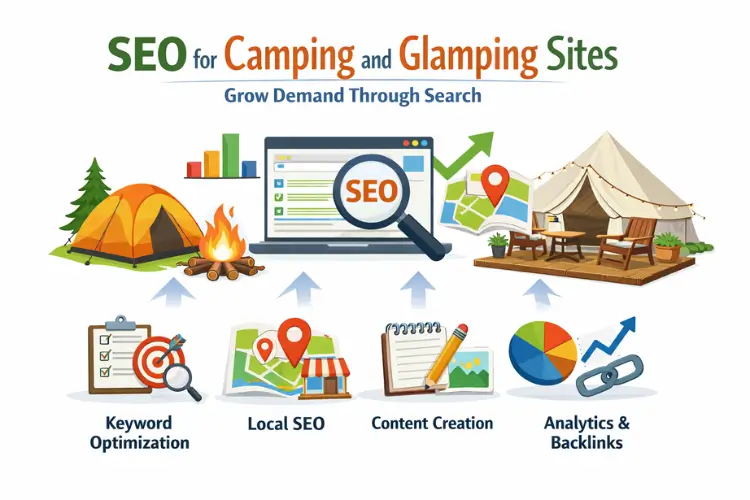
Camping and glamping have become a preferred way to take a break, celebrate weekends, and spend time outdoors with comfort. People search with clear intent, comparing places, checking photos, reading reviews, and looking for easy booking. When your site appears at the right time with the right page, you get visitors who already want what you offer. Strong SEO helps you show up for location based searches, experience based searches, and seasonal searches while building trust through useful content.
- SEO for Camping and Glamping Sites: Grow Demand by Showing Up for Location, Experience, and Seasonal Searches
- 1. Understand search demand for camping and glamping
- 2. It is important to map search intent to your site structure
- 3. On page SEO that helps guests choose and book
- 4. Technical SEO basics for faster pages and smoother bookings
- 5. Local SEO that brings nearby and city based bookings
- 6. Content strategy that matches the growing demand for outdoor stays
- 7. It is important to optimize for images, video, and visual search
- 8. Link building and authority for camping and glamping websites
- 9. It is important to track SEO performance and bookings together
- 10. Improve trust signals that matter for glamping and camping guests
- 11. Optimize for “near me” and experience based searches
- 12. Build a long term SEO plan that stays steady across seasons
1. Understand search demand for camping and glamping
Search demand for stays works differently from many other businesses because people plan around dates, weather, budgets, and group size. Many searches are local or near a landmark, and many are experience based, like bonfire nights, pet friendly stays, or luxury tents with a view. When you understand what people actually type, you can build pages that match those needs and bring in bookings instead of random traffic.
1.1 Identify the main search themes people use
People usually search in themes such as location, accommodation type, and experience. Location searches look like glamping near Rishikesh or camping in Coorg. Accommodation searches look like luxury tents, treehouse stay, dome glamping, or caravan stay. Experience searches look like river side camp, bonfire and music, stargazing camp, or couple friendly campsite. Make a simple list of themes before you touch your website pages.
Once you have themes, connect them to your actual inventory and packages. If you have safari tents and also a family tent area, treat those as separate pages, not a single mixed page. This makes the page more focused and easier to rank. It also helps guests land on the option that fits them, which improves enquiries and bookings.
1.2 Find long tail keywords that match booking intent
Long tail keywords often bring the best leads because they show a clear plan. Examples are glamping with private jacuzzi near Lonavala, camping with washroom and meals in Jaisalmer, or pet friendly camping near Bangalore. These searches are lower in volume, yet the visitor is usually closer to booking. Capture these terms by creating specific pages and writing specific sections on those pages.
You can collect long tail ideas from your own guest questions, chat logs, and call notes. Also check the “People also ask” and related searches sections on Google. Write down phrases that include amenities, rules, and pain points like parking, food, toilets, safety, and accessibility. These are not small details for guests, they are decision makers.
1.3 Use seasonal trends to plan pages and posts
Camping and glamping demand often changes by month due to weather, holidays, and school calendars. Some locations peak in winter, others in monsoon, and some do well year round. Use this seasonality to plan what to publish and when. A page about winter camping in your region can start ranking before the season if you publish early.
Google Trends can help you compare terms like camping near me, glamping, or tent stay in your target region. You can also look at last year’s booking months in your own data. Build a simple content calendar around peaks such as long weekends, festivals, and school breaks. This keeps your site fresh and aligned with what people want at that time.
1.4 Study competitor pages to understand what Google rewards
Competitor research is not about copying, it is about spotting patterns. Search for your main terms and open the top pages. Look at what they include: pricing clarity, inclusions, location map, FAQs, policies, photo galleries, and itinerary ideas. Often, the pages that rank well answer questions quickly and reduce booking anxiety.
Tools like Ahrefs or Semrush can show which pages bring traffic to other campsites, and which keywords those pages rank for. Use them to find gaps you can fill, like a missing page for family friendly glamping in your area. Then create a better page with clearer details, stronger photos, and more helpful FAQs based on real guest questions.
1.5 Decide the keywords for each page before writing
One of the most common SEO mistakes is trying to rank one page for everything. Instead, assign a clear primary keyword and a small set of supporting keywords to each page. For example, your main property page can target glamping in Wayanad, while a separate page can target luxury tents in Wayanad with meals.
This simple mapping keeps your content focused and reduces internal competition between your own pages. It also guides your headings, your FAQ section, and your image file names. When every page has a job, your site becomes easier for Google to understand and easier for guests to navigate.
2. It is important to map search intent to your site structure
Your site structure is the bridge between what people search and what you offer. Guests want quick answers, and Google wants clear signals. A strong structure means each important offering has its own page, pages are linked logically, and the booking path stays simple. For camping and glamping, structure also helps you cover different stay types, locations, and experiences without creating confusion.
2.1 Build core pages that match real guest journeys
Most camping and glamping sites need a small set of core pages that guests expect. These usually include a main property page, accommodation pages, experiences or activities, pricing or packages, gallery, location, and contact or booking. If you run multiple sites, you may also need a page for each site with clear local details.
Think about what a guest does before booking. They check where it is, what they get, what it costs, and what it feels like. Place those answers within one or two clicks from the homepage. A clear menu and clear internal links help both guests and search engines understand your priorities.
2.2 Create location pages when you serve multiple areas
If you operate camps in different towns or offer pick up points from different cities, location pages can be powerful. A location page should be real and specific, not a thin page with a few lines. Include how to reach, driving time from common points, nearby landmarks, and what the location is known for. Add unique photos from that specific site and mention the stay types available there.
Avoid making dozens of near identical location pages with only the city name changed. That usually leads to weak performance and can create trust issues. A smaller number of strong location pages performs better and is easier to maintain. Each page should feel like it was written by someone who knows that place.
2.3 Separate accommodation pages by stay type and comfort level
Camping and glamping cover a wide range, from basic tents to luxury domes. Guests often filter by comfort and privacy. Create separate pages for each accommodation type, like Swiss tents, dome glamping, cottage tents, treehouses, or caravan stays. Each page should include size, capacity, bedding, washroom details, electricity, heating or cooling, and what is included.
Use clear and honest descriptions because this reduces cancellations and review complaints. Mention what the guest gets during the stay, such as breakfast, campfire, guided walk, or activity access. When the page matches what guests want, it converts better, and better conversions often support better rankings over time.
2.4 Add experience pages for what makes your place special
Many guests choose a campsite for the experience rather than the bed. If you offer river rafting tie ups, jeep safari, guided treks, farm visits, pottery, kayaking, or stargazing setups, create experience pages. These pages can rank for searches like stargazing glamping or camping with trekking near me.
Each experience page should answer timing, safety, group size, season, and what guests need to carry. Add real photos and a simple itinerary example, like evening tea, sunset viewpoint, campfire dinner, and morning walk. These pages also give you natural internal links from accommodation pages and blog posts.
2.5 Use internal links to connect pages with purpose
Internal links help Google discover your pages and help guests move toward booking. Link from the main property page to each accommodation type, and from each accommodation page to the booking page. Link to experiences that pair well with that stay type, like family tents linking to kids friendly activities.
Use descriptive link text that makes sense to guests, like “See dome glamping options” or “Check family tent packages.” Avoid vague links like “click here.” Also add a “related” section at the end of key pages, such as nearby attractions, packing tips, and FAQs, so visitors stay longer and find answers without leaving.
3. On page SEO that helps guests choose and book
On page SEO is where you align your content with what people search and how they decide. For camping and glamping, the page must do two jobs at once. It should help Google understand the page topic clearly, and it should help guests feel confident about booking. When your headings, copy, images, and FAQs are well planned, you usually see both higher rankings and higher conversion rates.
3.1 Write page titles and meta descriptions that sound human
Your title tag is often the first thing a guest sees in search results. Keep it clear and specific, like Luxury Glamping Tents in Igatpuri with Meals and Bonfire. Add the key detail guests care about, such as location, stay type, and a strong inclusion. Meta descriptions should read like a helpful line, not a list of keywords.
Aim to set expectations and reduce doubts. Mention parking, clean washrooms, couple or family friendly setups, and booking flexibility if that is part of your offer. A good snippet improves click through rate, and better click through rate can support better rankings for competitive terms.
3.2 Use headings that match how people scan a page
Guests scan before they read. Use headings to make the page easy to skim. Typical headings that work well are Stay Overview, What’s Included, Amenities, Food Options, Activities Nearby, Location and How to Reach, Safety and Rules, and FAQs. Place the most important answers near the top, especially washroom details, privacy, and inclusions.
Use your main keyword naturally in the first main heading and in a couple of subheadings where it fits. Do not force it into every heading. The goal is clarity, not repetition. When the headings reflect real questions, guests stay longer and read more, which is a strong engagement signal.
3.3 Build FAQs that cover the real booking blockers
FAQs are one of the best tools for campsite SEO because guests have many specific concerns. Common FAQ topics include washroom type, hot water, electricity, mobile network, safety at night, pet policy, alcohol policy, music rules, check in times, and what happens in rain. Include answers that are specific to your property and region.
Write answers in plain language and keep them consistent with your on ground rules. If you have quiet hours, say them clearly. If you have limited network, mention it and suggest what works, like a particular carrier near the site. Strong FAQs reduce support calls and help your page rank for question based searches.
3.4 Use images in a way that supports SEO and trust
Photos are a major decision factor for glamping and camping stays. Use high quality images of tents, washrooms, common areas, views, food, and activities. Name image files in a descriptive way, like dome-glamping-igatpuri-interior.jpg, and write simple alt text that describes what is in the photo.
Compress images so the site stays fast, especially on mobile. Many guests will visit your site on a phone during travel planning. A slow gallery can lead to drop offs. Also consider adding a short caption under key images, like “Private deck outside the dome tent,” because captions are often read and help set expectations.
3.5 Add structured details that make pricing and inclusions clear
Guests want clarity on pricing, what is included, and what costs extra. Put inclusions in a simple bullet list, and show package options if you have them. Mention meal types, timing, and any activity slots. If taxes are extra, state it clearly. If you have weekday and weekend rates, show them in a simple table.
Add a short example of a typical stay flow, like arrival at 3 pm, evening tea, campfire at 8 pm, breakfast at 8 am, checkout at 11 am. This helps guests imagine the experience. A clear page reduces hesitation and increases the chance that a visitor becomes a booking.
4. Technical SEO basics for faster pages and smoother bookings
Technical SEO is about making sure your site loads quickly, works well on mobile, and is easy for search engines to crawl. For camping and glamping sites, technical issues often show up around heavy galleries, booking widgets, and messy URL structures. Small fixes can create a big difference in rankings and enquiry rates because guests expect a smooth experience from the first click.
4.1 Improve mobile speed without losing photo quality
Most guests search for stays on mobile. Large images, auto playing sliders, and heavy scripts can slow the site down. Compress images, load below the fold images lazily, and keep the homepage slider minimal. If you use video, keep it short and optional. Speed helps SEO and also helps conversions, especially when people compare options quickly.
Google PageSpeed Insights can give you a clear list of fixes, and it is free to use. Focus on the highest impact items first, like image sizing, caching, and unused scripts. If your booking widget is heavy, load it after the main content so the page feels fast while the booking module finishes loading.
4.2 Keep URLs clean and consistent across your site
Clean URLs are easier for guests to read and easier for Google to understand. Use short, descriptive URLs like /glamping-tents-lonavala/ or /camping-packages-coorg/. Avoid random numbers, long parameters, and multiple versions of the same page. Pick one format and stick to it across the site.
If you have old URLs, use proper redirects to the new pages. This helps you keep any existing rankings and links. Also watch out for duplicate pages created by filters, tracking parameters, or booking engine links. Duplicate pages can dilute your signals and make it harder for your best pages to rank.
4.3 Make sure your site is crawlable and indexed properly
Your site needs to be easy for search engines to crawl. Create an XML sitemap and submit it in Google Search Console. Make sure important pages are not blocked by robots.txt and that they return a proper 200 status code. If you have thin pages or test pages, keep them out of the index so they do not weaken your site.
Google Search Console is also helpful for spotting coverage issues and indexing errors. Check which pages are indexed, which ones are excluded, and why. Fix issues like soft 404s, redirected chains, and server errors. These fixes improve how reliably your pages show up for searches during peak season.
4.4 Use schema markup that fits stays and local intent
Schema markup helps search engines understand your business details. For camping and glamping sites, you can use LocalBusiness schema for your property and add details like address, phone, opening hours, and geo coordinates. You can also add FAQ schema for your FAQ sections, and review markup where it is allowed and valid.
Schema does not guarantee rich results, yet it can improve clarity and eligibility. Keep the information accurate and consistent with what is on the page. If your address is a general area, be careful and use the best available location details, like a nearby landmark and correct map pin, so guests do not get confused.
4.5 Make the booking journey trackable and friction free
SEO traffic is valuable when it leads to bookings. Track booking clicks, enquiry form submissions, WhatsApp clicks, and phone calls. Use a simple analytics setup so you know which pages drive revenue. If you use a booking engine, ensure the booking flow works smoothly on mobile and does not break when a user goes back.
A common issue is sending users to a booking page that does not match the stay type they selected. If someone clicks “Dome Glamping,” the booking page should open with that option selected or clearly visible. Reducing friction increases conversion rate, and better conversion rate often leads to better business decisions around what content to build next.
5. Local SEO that brings nearby and city based bookings
Local SEO matters a lot for camping and glamping because most guests search with a place name or they search from a nearby city. They want something reachable, safe, and easy to plan. When your local presence is strong, you can show up on Google Maps, in local results, and for “near me” searches. This often brings high intent traffic that converts well, especially for weekend plans.
5.1 Set up and optimize your Google Business Profile properly
Your Google Business Profile is one of the fastest ways to get visibility for local searches. Add your correct business name, category, address or service area, phone number, and website link. Use a clear primary category that matches your offering, and add secondary categories only when they truly apply. Upload fresh photos regularly, including tents, washrooms, common areas, entry point signage, and views.
Keep your profile active with updates and posts during peak season. Mention new packages, seasonal highlights, and availability in a simple way. Also check that your map pin is correct so guests do not end up in the wrong place. A wrong location pin can lead to poor reviews and cancelled bookings.
5.2 Build consistent NAP across listings and your website
NAP means Name, Address, and Phone number, and consistency is important. Use the same format on your website footer, contact page, and Google Business Profile. Then carry that same format into key local listings where travelers search, like local tourism directories and travel platforms where you are listed.
Small inconsistencies can confuse search engines and guests. For example, using two different phone numbers or slightly different address spellings can reduce trust. If you have multiple properties, keep each property’s NAP separate and clean. It is better to have one strong listing per real location than several mixed ones.
5.3 Create location focused content that answers real travel questions
Local content works when it helps guests plan. Create pages and posts around questions like how to reach your campsite from a nearby city, best routes, travel time, tolls, and parking. Add details about the nearest market, medical help, and network availability. These are not random details, they are practical decision points for families and groups.
You can also publish short local guides such as “Best viewpoints near our campsite” or “Things to do near our glamping site.” Keep it simple and honest. Add a small map and mention approximate distances. This kind of content naturally earns time on page and helps your site rank for local intent searches.
5.4 Encourage reviews in a natural way and respond with care
Reviews are one of the strongest trust signals for camping and glamping stays. Ask guests for a review after checkout through a simple message. Keep the message polite and short, and do not push for a perfect rating. Many guests are happy to review if the stay was comfortable and the process is easy.
Respond to reviews thoughtfully, including negative ones, without arguing. If someone mentions cleanliness or washroom issues, acknowledge it and explain what you improved. These responses are public and future guests read them. A consistent review strategy improves both your conversion rate and your local rankings over time.
5.5 Build local backlinks through partnerships and real mentions
Backlinks help SEO, and local backlinks are especially useful for local searches. Partner with local cafes, adventure operators, taxi services, guides, and event organizers. If you collaborate, ask for a simple mention and link on their site. You can also work with local bloggers or travel writers, but focus on real experiences rather than paid spammy posts.
A practical approach is to create a “Local Partners” page listing trusted operators and nearby attractions. This helps guests and gives you a reason to reach out to partners. When local sites link back to you, it sends a strong signal that your business is relevant in that area.
6. Content strategy that matches the growing demand for outdoor stays
Content marketing works best for camping and glamping when it is built around guest intent. People are not just searching for a place to sleep, they are searching for a plan that feels safe, worth the money, and easy to book. Your content should reduce doubts, show what is unique about your site, and help guests imagine the stay. This is how you capture the growing demand without relying only on ads.
6.1 Create high intent pages before writing too many blog posts
Many sites publish blog posts but forget to build the pages that actually sell. Start with your money pages first: accommodation pages, packages, local landing pages, and experience pages. These pages can rank and convert directly. Once these pages are strong, then use blog posts to support them with internal links.
For example, a blog post about “What to pack for monsoon camping” should link to your monsoon friendly packages page. A post about “Best stargazing months” should link to your stargazing experience page. This connects information to bookings and makes your content work as a system.
6.2 Write blog topics that answer planning questions clearly
Good blog topics for this industry are practical and specific. People search for safety tips, packing lists, weather guidance, and itinerary ideas. Topics like “Camping with kids checklist,” “Glamping for couples weekend plan,” and “How to choose between tent and dome stay” attract readers who are close to making a decision.
Keep each post focused and avoid writing general travel stories that do not connect to your property. Add simple examples, like a sample weekend schedule or a quick budget breakdown. Guests appreciate clarity. You can also include short sections that answer common questions like washroom expectations and food inclusions.
6.3 Use photos, short videos, and real details to build trust
In this niche, visuals can make or break a booking. Add real photos to posts and pages, not only stock images. Show the approach road, parking area, washrooms, food setup, and nighttime lighting. These are the small things that convince guests that the stay will be smooth.
If you use short videos, keep them light and load them properly so the page stays fast. A quick 20 second clip of the tent interior or the campfire area can improve time on page. Guests want a realistic view, not an over edited one that feels different from the actual site.
6.4 Build content clusters so Google sees topical depth
A content cluster means you have a main page and several supporting pages around it. For example, your main page can be “Glamping in Lonavala” and supporting posts can cover “Best season for glamping in Lonavala,” “How to reach from Pune,” “Lonavala weekend itinerary,” and “What to pack for hillside stays.” Link them to each other naturally.
This structure helps search engines see that you have depth in a topic. It also keeps visitors on your site longer because each post leads to the next useful resource. Over time, this improves authority, rankings, and bookings because guests feel you are the best source for that location and stay type.
6.5 Use simple tools to plan and improve content without guessing
A keyword tool like Semrush or Ahrefs can help you see search volumes, related questions, and competitor pages, but you do not need to overcomplicate it. Even free tools like Google Search Console and Google Trends can guide you toward what people actually search. Search Console is especially useful because it shows real queries that already trigger your site.
If you want to write faster and more consistently, a simple content brief template helps a lot. Include the target keyword, the main questions to answer, and the internal links to add. This keeps posts focused and avoids thin content. Over time, consistent helpful content builds a stable traffic base.
7. It is important to optimize for images, video, and visual search
Camping and glamping is a visual choice. People decide based on what it looks like, how private it feels, and whether it matches their comfort expectations. Because of that, your SEO should treat visual assets as a core part of the strategy, not an afterthought. Image optimization helps your site load faster, rank in image results, and build trust that improves bookings.
7.1 Create a photo plan that covers decision making moments
Do not only upload the best looking sunset photo. Guests want to see the tent interior, bedding, washroom, shower area, dining setup, pathways, and lighting at night. Families want to see safety and space, couples want to see privacy, and groups want to see seating and common areas.
Make a simple shot list and update it every season. Photos from different seasons help you rank for seasonal searches and set correct expectations. Also add captions where helpful. Captions can quietly answer questions like “Attached washroom inside dome tent” which is a major booking factor.
7.2 Use file names, alt text, and folders in an organized way
Before uploading, rename files with descriptive names. A file name like IMG_2039.jpg gives no signal, but “luxury-glamping-dome-igatpuri-bed.jpg” is clear. Alt text should describe what is in the image in simple words. This helps accessibility and also helps search engines understand your visuals.
Keep image folders organized by property and by stay type so your team can manage them easily. When you add new accommodation types, build a folder and naming style from the start. This avoids messy galleries later and saves time when you want to improve pages quickly before a peak season.
7.3 Use compression and modern formats to keep the site fast
Heavy galleries can slow down your site and hurt both rankings and bookings. Compress images before uploading. Use modern formats like WebP if your site supports it, because it often reduces file size without visible quality loss. Also ensure your images are served at the right dimensions so a mobile user is not loading a huge desktop sized file.
If you have a WordPress site, plugins can help with image compression, but keep it light and choose a reliable one. If you are unsure, ask your developer to set up server side compression and lazy loading. Speed improvements usually show up in lower bounce rate and better enquiry rates.
7.4 Add video carefully so it supports SEO instead of hurting it
Videos can help guests understand the space quickly. A short walk through of the tent, washroom, and view can reduce doubts and improve conversions. Place videos where they support decisions, like on accommodation pages and the gallery page. Keep them short and realistic.
Host videos in a way that does not slow the page. If you embed from YouTube, use a lightweight embed method so the page loads fast. If you host directly, make sure the files are optimized. The goal is to add clarity, not to create a slow page that guests leave before they even watch.
7.5 Use visual storytelling in content without overdoing it
When you write a blog post, add 3 to 6 helpful images instead of stuffing 20. Use images to show steps, like packing examples, campsite layouts, or nearby spots. This keeps the page easy to read and supports your words with proof.
You can also use simple graphics like a checklist image for packing or a small itinerary card, but keep it clean and consistent. Visuals should look like they belong to your brand. Over time, this consistency builds recognition and makes your site feel trustworthy compared to random aggregator pages.
8. Link building and authority for camping and glamping websites
Authority is a major ranking factor, especially for competitive location terms where many campsites and travel pages compete. Link building does not mean chasing thousands of links. It means earning relevant mentions from real sites that make sense for your business. For camping and glamping, the best links usually come from local partners, travel content, and community connections.
8.1 Fix your internal linking before chasing external links
Many sites waste time on external outreach while their internal linking is weak. Start by linking your blog posts to your accommodation and package pages. Link your accommodation pages to experiences and FAQs. Link your location pages to nearby attraction guides and route guides.
This internal structure helps distribute authority within your site. Even if you get a few good backlinks, internal links help that benefit reach your key booking pages. It also improves user journey, which increases conversions and reduces bounce rate.
8.2 Get listed in relevant travel and local directories
Directory links can be useful if they are legitimate and relevant. Focus on quality directories that travelers actually use and local listings that rank in your area. Avoid spammy directories that exist only for SEO. A few strong listings are better than dozens of low quality ones.
Make sure your business details stay consistent across these listings. Include real photos and accurate descriptions. If the directory allows it, link to your most relevant page, like the main property page for that location. These listings can also drive direct bookings, not just SEO value.
8.3 Earn links through useful resources people want to reference
Create resources that other sites want to reference, such as a local camping checklist, a seasonal guide for your region, or a map of nearby attractions. If your area has unique weather patterns, publish a simple guide on what to expect and how to plan. These resources can earn links from blogs, community sites, and travel forums.
For example, if your campsite is near a trekking trail, write a guide about that trail with timing, difficulty, and safety tips. Then reach out to local trekking groups and websites. When your content genuinely helps their audience, they are more likely to link to it.
8.4 Use PR and story angles that feel natural for your property
Press links can be powerful, but they need a real angle. It can be a new eco friendly initiative, a community partnership, a unique stay type, or a seasonal festival experience you host. Keep the story honest. Local news sites and travel publications are more likely to cover something that is real and relevant.
If you host events like nature workshops, birdwatching weekends, or local food nights, create a simple event page and share it with local event calendars. Even a few mentions from real local publications can strengthen your authority and bring referral traffic that converts.
8.5 Avoid shortcuts that can hurt your rankings over time
Buying links, using link farms, and publishing thin guest posts on random sites can backfire. Search engines are good at spotting unnatural patterns, and you can lose rankings just when you need them most during peak season. Focus on slow, steady link growth.
A good rule is relevance first. If a site is about travel, outdoors, local culture, or your location, it may be worth pursuing. If it has nothing to do with your niche, it is usually not worth the risk. Link building should support trust, not create doubts.
9. It is important to track SEO performance and bookings together
SEO is only useful when it helps your campsite get more enquiries, more bookings, and better quality guests. Rankings alone can look good while revenue stays flat if the wrong pages are attracting the wrong visitors. Tracking connects your content work to real business results, so you know what to improve, what to expand, and what to stop doing. This is especially important for camping and glamping because demand changes with seasons and weekends.
9.1 Set up Google Search Console to see real search queries
Google Search Console shows what people typed before they saw your site, which pages appeared, and how often they clicked. This helps you spot winning topics and missed opportunities. You might find that your dome glamping page is showing up for “private washroom glamping,” but your page does not explain washroom details clearly. That is a simple fix that can increase clicks and bookings.
Check Search Console weekly during peak season and monthly during off season. Focus on queries with high impressions and average positions between 6 and 20, because small improvements can push them into the top results. Update headings, add a better FAQ, improve the meta description, and strengthen internal links to those pages.
9.2 Use analytics to track enquiry clicks, calls, and booking steps
Traffic is not the goal, actions are. Set up tracking for phone clicks, WhatsApp clicks, enquiry form submissions, and booking button clicks. If you use a booking engine, track the start of checkout and completed bookings if possible. This shows you which pages bring visitors who actually take action.
Google Analytics can handle these events, and many website builders make it easy to add. Keep your setup simple and consistent. When you know which pages convert, you can prioritize improving those pages and building more pages like them. This saves time and helps you grow steadily instead of guessing.
9.3 Measure conversion rate by page type, not only by traffic
A blog post may bring many visits, while a location page may bring fewer visits but more bookings. Compare conversion rates by page type: accommodation pages, packages, experiences, and blog posts. This helps you see where to invest. Often, improving a high converting page can bring better results than publishing ten new posts.
For example, if your “family camping package” page converts well, you can create related pages like “family camping with meals” or “family glamping weekend package” and link them together. You can also improve that page with clearer inclusions, stronger photos, and better FAQs. This approach grows bookings without needing massive traffic.
9.4 Use call notes and chat logs as SEO improvement data
One of the most overlooked SEO data sources is your own customer conversations. Guests ask the same questions again and again, like washroom type, safety at night, cancellation policy, and how to reach the site. Each repeated question is a signal that your pages are missing clarity. Add those answers directly to your pages in a simple way.
Keep a shared note with your team listing the top 20 questions asked in calls and WhatsApp chats. Then update your pages based on that list. This improves user experience and reduces support load. It also helps you rank for question based searches because your page language matches how guests actually speak.
9.5 Create a monthly SEO review routine that is easy to follow
A good SEO routine does not need to be complex. Once a month, review Search Console queries, top landing pages, and conversion events. Identify which pages gained impressions, which pages dropped, and which pages have high traffic but low action. Then choose a small set of fixes, like updating 3 pages and publishing 2 supporting posts.
Keep a simple tracking sheet with page name, primary keyword, impressions, clicks, and bookings. Over 3 to 6 months, patterns become clear. You will see which locations and stay types perform best, and you can plan expansions based on real demand instead of assumptions.
10. Improve trust signals that matter for glamping and camping guests
For outdoor stays, trust is everything. Guests worry about safety, hygiene, comfort, and whether the place will match the photos. Strong SEO brings traffic, but trust signals turn that traffic into bookings. Search engines also notice trust signals indirectly through reviews, engagement, and brand searches. A trustworthy site usually earns better results over time.
10.1 Show clear policies to reduce booking hesitation
Many people avoid booking if policies are unclear. Make your cancellation policy, reschedule rules, check in and check out times, and ID requirements easy to find. Write them in plain language and keep them consistent across your website and messages. If you have special rules like quiet hours or alcohol restrictions, mention them clearly.
Avoid hiding important details in tiny text. Guests appreciate honesty, and honesty reduces conflicts later. A simple policy section on every accommodation page and the booking page helps a lot. It also reduces negative reviews caused by misunderstanding, which protects both your rankings and your reputation.
10.2 Use real guest reviews and stories across key pages
Reviews are not only for Google Business Profile. Add review snippets on your website too, especially on accommodation pages and the booking page. Use real names when allowed and keep the quotes short. If you have repeated praise points like cleanliness, staff support, and food quality, highlight them because those are common decision drivers.
You can also create a simple “Guest Moments” page with short stories like family birthdays, group reunions, or couple stays, but keep it genuine and not overly promotional. Add photos only if guests allow it. These stories make your site feel real and reduce the fear of “unknown place” that many first time campers have.
10.3 Add safety and hygiene details without making it heavy
Guests want to know you take safety seriously, but they do not want long lectures. Create a short safety section covering lighting, staff presence, emergency contact, first aid, and basic guidelines for campfire use. For hygiene, mention washroom cleaning frequency, bedding hygiene, and drinking water arrangements.
Keep the tone simple and factual. If you have CCTV in common areas, mention it clearly. If you have designated parking and walkways, mention them. These details increase confidence and reduce pre booking calls. They also help you rank for searches like “safe camping for family” because you cover the topic naturally.
10.4 Provide clear contact options and fast response methods
Many guests want quick answers before booking. Offer a phone number, WhatsApp, and an enquiry form, and make them easy to find on mobile. If you can, add a simple response time note like “We usually reply within 30 minutes during 9 am to 9 pm.” This sets expectations and builds trust.
Also ensure your contact page includes a map, directions, and a landmark. Some guests will not book if they feel the place is hard to reach. A clear contact setup improves conversion rate and supports local SEO because it reinforces consistent business information.
10.5 Keep your branding consistent so the site feels reliable
Consistency matters more than fancy design. Use the same name, logo, tone, and policies everywhere. If your photos show one type of tent but the booking page shows another, guests feel unsure. If you have multiple properties, label them clearly and avoid mixing photos.
A clean and consistent experience makes people stay longer and explore more pages. This improves engagement signals that often support SEO results. It also leads to better referrals and repeat bookings, which creates more brand searches and more review volume over time.
11. Optimize for “near me” and experience based searches
Many camping and glamping searches are not just location based, they are experience based. People type what they want to feel and do: bonfire, mountain view, river side, pet friendly, couple friendly, and private stay. These searches are usually very high intent because the person already decided on the type of outing. When you optimize for these experiences, you attract guests who fit your offering and are ready to book.
11.1 Build experience landing pages that match real offerings
If you offer river side seating, guided treks, stargazing gear, or private deck tents, create a page for each key experience. Each page should describe what the experience includes, who it is best for, and which accommodation types pair well with it. Add photos and a short sample flow so guests can picture it.
Do not invent experiences only for SEO. If you do not allow music or campfires on some days, mention that. Experience pages rank best when they feel real and detailed. They also help your main pages because they give you internal linking options and add depth to your site.
11.2 Use nearby city pages for weekend intent searches
A big part of demand comes from nearby cities where people plan a quick trip. Create pages like “Glamping near Pune” or “Camping near Bangalore” only if you can support them with real travel details. Include driving time ranges, best routes, weekend packing tips, and what type of guests usually come from that city.
These pages work well when they are written for real travelers, not just stuffed with city names. Mention common starting points like airport areas or key junctions, and explain the easiest way to reach. Add FAQs like “Is it okay for a one night trip?” and “What time should we leave the city?” because that is what people actually ask.
11.3 Optimize for couples, families, and groups with dedicated sections
Different guest types care about different details. Couples care about privacy, comfort, and calm. Families care about safety, washrooms, and easy food options. Groups care about common seating, activity options, and noise rules. Add dedicated sections on your pages that speak to each guest type, and if demand is strong, create dedicated pages.
Use the language guests use, like “couple friendly glamping” or “family camping with clean washrooms.” Keep the tone respectful and clear. These sections help you rank for specific searches and also improve conversion because visitors feel the page was written for them.
11.4 Use FAQs to capture “near me” and quick plan questions
“Near me” searches often come with last minute doubts, like availability, check in time, and rain plans. Build a strong FAQ section that answers quick plan questions: “Do you allow one night stays?” “Can we reach late?” “Is there network?” “What happens if it rains?” “Do you provide blankets?” These are common and highly relevant.
Write short answers and keep them consistent across pages. If you have different rules for different seasons, mention it clearly. FAQs can help you show up for question searches and can also improve your chance of appearing in rich results when combined with proper FAQ schema.
11.5 Add local landmark references naturally on key pages
People often search using landmarks rather than city names, like “near waterfall,” “near fort,” or “near national park.” If your location genuinely matches, mention the landmark in your content. Add a “Nearby Places” section with approximate distances and travel time. This helps your page rank for landmark searches and improves guest planning.
Be careful with accuracy. Do not claim to be near a famous spot if it takes hours to reach. Guests lose trust quickly when they feel misled. Honest landmark references build confidence and reduce cancellations, which protects both your reputation and your long term SEO.
12. Build a long term SEO plan that stays steady across seasons
Camping and glamping demand has peaks and dips. A long term SEO plan helps you stay visible during off season and dominate during peak season. The goal is not short term hacks, it is steady improvement in content, technical health, and trust signals. When you maintain this consistency, your site becomes the obvious choice in search results for your location and stay style.
12.1 Plan quarterly goals based on season and business priorities
Break your SEO plan into quarters. Before peak season, focus on page updates, speed improvements, and publishing high intent pages. During peak season, focus on conversion improvements, review collection, and fixing issues quickly. After peak season, focus on new content, partnership links, and building pages for new stay types or new locations.
Tie each quarter to a clear business goal, like increasing weekday bookings, filling monsoon months, or promoting a new dome area. This keeps SEO aligned with revenue. It also makes it easier to assign tasks to your team or your agency without confusion.
12.2 Refresh existing pages instead of only creating new ones
Refreshing pages often brings faster results than writing new posts. Update photos, pricing sections, inclusions, and FAQs based on recent guest questions. Add new reviews and recent seasonal details. If you added a new activity or improved washrooms, update the page and mention it clearly.
Google prefers fresh and accurate content, especially for travel related decisions. When guests see updated details, they trust the site more. Small updates can move a page from position 8 to position 3, which can change bookings dramatically during peak demand.
12.3 Create a repeatable content system your team can handle
A content system is a simple routine your team can follow. For example, publish two supporting posts each month, update two key pages, and add new photos to Google Business Profile weekly. Keep a shared checklist so tasks do not get skipped. Consistency matters more than big bursts of work.
If you have limited time, focus on content that supports bookings directly. Route guides, packing guides, and local attraction guides often perform well for camping and glamping. They also give you natural places to link to your booking pages without sounding forced.
12.4 Align SEO with social content and guest communication
SEO works better when your messaging is consistent across platforms. If you post about a monsoon offer on Instagram, update your website page for that offer and ensure it is searchable. If guests ask repeated questions in comments, add those answers to your FAQ sections. Use your social content as a feedback loop for what people care about.
This does not mean you need to chase trends. It means you listen to your audience and use that language on your site. Over time, your site becomes more aligned with real guest intent, which helps rankings and also improves conversion because visitors feel understood.
12.5 Keep improving based on results, not assumptions
SEO gets easier when you let data guide you. If a location page brings high intent visitors, expand with related pages and experiences. If a blog post brings traffic but no enquiries, adjust the internal links, add a stronger call to action, and improve the match between the post and your offers.
Treat SEO like a cycle: publish, measure, improve, repeat. Over months, this builds a stable traffic base and stronger brand presence. For camping and glamping sites, steady SEO is one of the best ways to grow bookings while demand keeps rising, because you keep showing up when people are actively searching to plan their next outdoor stay.