
SEO for Local Tour Guides: Rank in City Searches and Attract Travelers
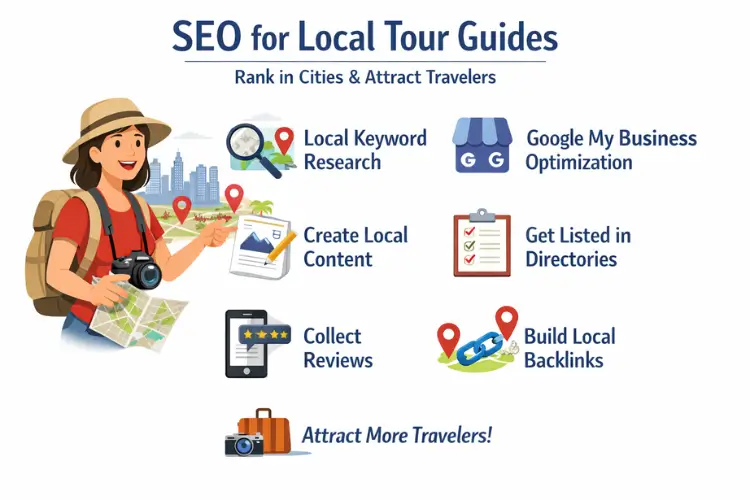
Local tour guides grow fastest when people can find them at the exact moment they are planning a trip, standing near a landmark, or comparing options for the weekend. Search engines try to match those moments with the most helpful local businesses, based on clarity, trust, and real-world signals like reviews and location details. When your online details are consistent and your pages answer common questions, you get more calls, more booking requests, and better leads. A steady local SEO setup also helps you compete with bigger operators because you can be the best match for a specific city and a specific style of tour.
- SEO for Local Tour Guides: Rank in City Searches and Attract Travelers
- 1. Local SEO basics for tour guides ranking in cities
- 2. Google Business Profile setup that it is important for city tour guides
- 3. Website foundations and on-page local signals for city rankings
- 4. City landing pages that rank and turn visitors into bookings
- 5. Reviews and reputation signals that support local tour guide SEO
- 6. Local citations and listings that strengthen city visibility
- 7. Content that attracts travelers and ranks for city searches
- 8. Local links and partnerships that grow city authority
- 9. Technical SEO checks that keep your city pages stable
- 10. Conversion SEO for tour guides turning city traffic into inquiries
- 11. Ongoing SEO routine for local tour guides staying on top in cities
1. Local SEO basics for tour guides ranking in cities
Local SEO for tour guides is about proving three things: you are real, you are relevant to a specific city or neighborhood, and people have a good experience with you. Search engines look at your business profile, your website, your mentions across the web, and customer feedback to decide where you should appear. City-based tours also have a strong “near me” and “things to do” intent, so your wording matters. Small improvements done consistently usually beat one-time big changes because local results reward steady trust.
1.1 Local intent and city-based keywords
People rarely search for “tour guide” alone, they search with the city name and a tour type like “heritage walk Jaipur” or “street food tour Delhi.” Build a short list of phrases your customers actually use, then match those phrases to specific pages on your site. One page can focus on one tour style, one city area, and one main intent, which keeps things clear.
Write your copy like a guide speaking to a guest, not like a list of keywords. Use the city name naturally in headings, descriptions, and image alt text, and include nearby place names when it fits. This helps you show up for both broad city searches and neighborhood searches.
1.2 Map results vs website results
Map results usually show businesses that look close, trusted, and complete, especially when someone searches on a phone. Website results often reward depth, helpful content, and strong pages that answer questions. Tour guides can win on both by keeping a strong Google Business Profile and a website that explains tours, meeting points, and what is included.
Think of map results as the quick decision area, and your website as the place that closes the booking. When someone taps your listing, they should instantly see photos, reviews, pricing style, and a clear way to contact you. When someone lands on your tour page, they should understand the plan and feel comfortable paying or requesting a slot.
1.3 Relevance, distance, and prominence
Local rankings often come down to relevance, distance, and prominence. Relevance means your listing and pages match what the person searched for, like “sunset walk” or “old city tour.” Distance is how close the searcher is to your listed service area or address, which is why the right city details matter.
Prominence is your overall trust level, built through reviews, links, mentions, and consistency. A guide with clear services, strong photos, and steady reviews can outrank a bigger brand for specific searches. The goal is to build a profile that looks active and known in your city.
1.4 What makes tour guide SEO different
Tours are time-based, seasonal, and experience-driven, so people want details before they commit. Your SEO should highlight availability style, duration, meeting points, languages, and group size. If your page answers those questions quickly, people stay longer and contact you more.
Tour guides also benefit from location storytelling, because visitors search by landmarks and neighborhoods. Mention the places you cover in each tour, and add practical guidance like “best time to start” or “how to reach the meeting point.” That content supports both rankings and conversions.
1.5 NAP consistency across the web
NAP means name, address, and phone number, and consistency here is a trust signal for local search. If your business name is written one way on Google and another way on directories, the system gets mixed signals. Keep the same formatting everywhere, including your website footer and contact page.
If you work from home and do not want to show a full address, you can still keep a consistent service area setup. Use the same business name and phone number, and make sure your city and service coverage is clear. This reduces confusion and helps your listings strengthen each other.
1.6 A simple ranking plan for the next 60 days
Start with your Google Business Profile, then your website pages, then citations and reviews, then local links. This order works because it strengthens the biggest ranking signals first, and it keeps your work focused. Each week, make one meaningful improvement and track the result.
A simple example plan is: week one fix your profile and categories, week two publish or improve your main city tour pages, week three add photos and review replies, week four build a few local citations. After that, repeat with better content, fresh photos, and steady review requests. This approach stays manageable even when you are busy guiding.
2. Google Business Profile setup that it is important for city tour guides
Your Google Business Profile is often the first thing a traveler sees, even before your website. A complete profile helps you appear in map results, and it also helps you earn trust quickly because people can see reviews, photos, and contact options in one place. The best profiles feel specific, updated, and easy to understand within a few seconds. When your profile is structured well, it supports your website rankings too because it creates consistent business signals across Google.
2.1 Choose the right primary category
Your primary category is one of the strongest signals in your profile, so choose it carefully. If you are a walking tour operator, use the closest match Google offers for your service, and keep it consistent. Add secondary categories only when they truly match what you sell, such as “sightseeing tour agency” if it applies.
Avoid choosing categories just because they feel popular, because it can reduce relevance for your best searches. A clear category tells Google which searches you should show up for, like city tours, heritage walks, or sightseeing. It also helps customers understand you without guessing.
2.2 Set service areas and address details correctly
If you meet guests at landmarks and you do not operate from a storefront, you can set service areas that match your city coverage. Choose areas you truly serve, like central districts or nearby neighborhoods, rather than adding many far locations. This keeps your listing tight and relevant.
If you do have an office or a fixed meeting point, your address details should match what is on your website and directories. Consistency matters because the system cross-checks these details across sources. Clear location settings reduce mismatched map pins and customer confusion.
2.3 Write a business description that matches how people search
Your description should sound like a real person explaining the experience, with the city name included naturally. Mention the main tour types you offer, the typical duration range, and the style, like history-focused, food-focused, or photography walks. Add language options if that is a strength.
Keep it readable and helpful, not stuffed with repeated phrases. A good description gives both Google and customers a clean summary of what you do. It also sets the tone for the rest of your listing.
2.4 Add services, products, and tour highlights
Use the services section to list each tour type clearly, such as “Old City Heritage Walk” or “Street Food Evening Tour.” If Google shows a products style layout in your profile, add tour packages with short descriptions and price ranges. This gives people a quicker path to choose.
Write each listing like a mini tour card with what is included and who it suits. People often compare multiple options in the map view, so clarity helps you win clicks. This also supports better calls and booking inquiries because expectations are set early.
2.5 Photos and videos that build trust fast
Tour guides should add photos that show real moments: small groups, landmarks, food stops, and friendly faces, with guest permission when needed. Add a mix of wide landmark shots and close details that show the quality of the experience. Update photos regularly because fresh activity signals help.
Short videos can also work well, like a 15 second clip of a market lane or a viewpoint walk. Keep them steady and simple, and avoid heavy editing. The goal is to make a traveler feel confident that your tours are real and well-run.
2.6 Use posts and the Q and A section
Posts help you share updates like seasonal routes, festival walks, and limited weekend slots. Write posts in simple language, add one good photo, and include a clear call to action like “Request a date” or “Check availability.” Even one post per week can keep your listing active.
The Q and A section is a place where travelers ask practical questions, and you can also add common questions yourself. Answer with details like meeting point options, what to wear, and how long the walk is. These answers reduce repetitive messages and help convert unsure visitors.
3. Website foundations and on-page local signals for city rankings
A Google Business Profile can bring leads, but a strong website helps you rank for more searches and explain your tours with depth. Your website should make it easy for both people and search engines to understand your city, your tour types, and your booking method. Simple structure beats complicated design because clarity improves both rankings and sales. When your pages load fast, explain each tour well, and show local relevance, you build trust that supports map rankings too.
3.1 One main city page plus specific tour pages
Create one strong page focused on your main city, then create separate pages for each tour experience. The city page explains your overall service, your guiding style, and your coverage areas. Tour pages go deeper into the plan, what is included, and who the tour suits.
This setup helps you match many searches without cramming everything onto one page. It also makes internal linking easier because your city page can link to each tour page. Over time, this structure supports steady growth in rankings.
3.2 Title tags and headings that sound natural
Your title tag should include the city and the tour type in a readable way, like “Old City Heritage Walk in Jaipur | Private Walking Tour.” Your main page heading can follow a similar idea but written like a person. Use subheadings for sections like “What you will see” and “Meeting point.”
Avoid repeating the same phrase many times because it looks forced and does not help the reader. Instead, use close variations that people also search for, like “guided walk,” “sightseeing tour,” or “local storyteller.” This keeps the page natural and still relevant.
3.3 Add local landmarks and neighborhood language carefully
Mention the real places you cover, like specific gates, markets, forts, or temple lanes, only when they are part of your route. This helps you show up for searches that include those landmarks. It also helps travelers understand the tour shape and decide faster.
Use landmark mentions in a helpful way, like explaining what guests will learn there or why it matters. This approach supports rankings and improves the experience. It also makes your page more shareable because it feels like a local plan, not a generic sales page.
3.4 Build trust with clear details and FAQs
Tour pages should include the basics: duration, starting time options, walking distance, what is included, and what guests should bring. Add a short FAQ section covering common concerns like restroom breaks, weather plans, and child friendliness. This reduces hesitation and improves inquiry quality.
Write your FAQs in the same tone you use with guests. Keep answers short and practical, with no fluff. Search engines often pick up clear Q and A content, which can help you appear for long questions people type.
3.5 Add local business schema and tour markup
Schema is a structured format that helps search engines read your business details. Add LocalBusiness schema with your name, phone, service area, and website, and keep it consistent with your profile. If you list tours as separate experiences, you can also add Tour or Product style markup depending on your setup.
If you use WordPress, plugins like Rank Math or Yoast can help you add basic schema without heavy technical work. The goal is not to overcomplicate it, but to send clean signals. When your data is consistent, it reduces confusion and supports better display in search results.
3.6 Measure what pages bring calls and bookings
Tracking helps you spend time on what actually works, especially when you are busy with tours. Google Search Console is a simple tool that shows which searches bring clicks to each page and where you rank. You can use it to spot pages that are close to page one and improve them.
Also track contact actions like form submissions and WhatsApp clicks if you use them. Even a simple monthly review of top pages and top queries helps you decide what to update next. This keeps SEO work focused on real demand in your city.
4. City landing pages that rank and turn visitors into bookings
A strong city page works like a clear welcome desk for travelers. It helps you rank for city-wide searches, and it helps visitors quickly understand what you offer, how your tours feel, and how to book. When the page has clear routes, real details, and honest expectations, people stay longer and contact you more. That engagement also supports SEO because search engines notice when visitors find what they need.
4.1 Build one clear purpose for each page
Each page should have one main job, like “private walking tour in Ahmedabad” or “food tour in Kolkata.” When a page tries to cover too many cities or too many tour types, it becomes confusing and thin. Keep the focus tight and make the page feel like it belongs to that city.
A simple way to plan is to write down one main search phrase and a few close ones, then answer the questions that someone searching that phrase would have. Include the tour style, duration, and the main areas you cover. This keeps your page both relevant and easy to read.
4.2 Add meeting point clarity and route snapshots
Travelers worry about logistics, especially in busy city areas. Add a clear meeting point section that explains where you start, how guests can reach it, and what landmark to look for. If you offer pickup or flexible meetups, explain how it works without overcomplicating it.
Give a simple route snapshot like “Market lane, old gate, temple courtyard, rooftop viewpoint” so people can picture the flow. You do not need to reveal every stop, just enough to set expectations. Clear logistics reduces back-and-forth messages and improves booking confidence.
4.3 It is important to match the exact search intent
If someone searches “2 hour heritage walk,” they want a short experience and a plan that fits a tight schedule. If someone searches “full day city tour with car,” they want comfort, coverage, and structure. Your page should match the intent, not just mention the words.
Adjust your content based on the main intent of the page, like quick walks, deep history, food tasting, or photography. Include what makes that experience different, such as quieter lanes, storytelling style, or local snacks included. When the page matches intent, visitors do not bounce quickly.
4.4 Write inclusions and exclusions in plain language
People want to know what they are paying for, and unclear pages often lose bookings. Add a short list of inclusions like guide time, tasting items, entry tickets if included, and bottled water if you provide it. If something is not included, mention it clearly so there are no surprises.
Keep the tone calm and practical, like you are explaining it on a phone call. This reduces refund requests and awkward moments during the tour. It also improves reviews because guests feel the experience matched what they expected.
4.5 Add internal links that help visitors plan
Internal links help search engines understand your site, but they also help travelers plan their days. From your city page, link to each tour page, your contact page, and any useful blog posts like “best time to visit the old market.” Use simple link text that describes what the person will see.
On each tour page, link back to the city page and to related tours. For example, a heritage walk page can link to a street food tour as an evening option. This makes your site feel connected and it gently guides visitors toward booking.
4.6 Improve page speed and mobile experience
Most travelers search on a phone, sometimes while walking around. If your page is heavy and slow, people leave before they even understand your offer. Compress images, avoid large sliders, and keep layouts simple so the page loads quickly.
You can test speed using PageSpeed Insights or GTmetrix and then fix the main issues they point out. A common quick win is resizing photos to a reasonable width and using modern formats when possible. Faster pages usually improve both rankings and inquiry rates.
5. Reviews and reputation signals that support local tour guide SEO
Reviews are one of the strongest trust signals for city-based searches because they show real experiences from real visitors. They influence map rankings, click-through rates, and whether a traveler chooses you over another guide. A steady review flow looks natural and reliable, and it helps you build authority in your city over time. The goal is not just more reviews, but better reviews that mention what people actually liked and where the tour happened.
5.1 Ask for reviews at the right moment
The best time to ask is when the guest is clearly happy, usually right after the tour ends or after you share photos. Keep it simple, like “If you enjoyed the walk, a short review helps future travelers find me.” If you ask in a calm way, it does not feel pushy.
Send a direct review link in WhatsApp or email so it takes one tap. Many guests will not search for your profile on their own. One small step removed often means one less review.
5.2 It is important to guide the review without forcing words
You should never tell guests exactly what to write, but you can suggest what is helpful. For example, you can say “Mention the area we covered and what you enjoyed most.” This naturally leads to reviews that include city and landmark terms, which can support local relevance.
Keep it honest and optional, and let guests write in their own voice. Natural reviews sound real and help conversion because new visitors relate to them. Forced reviews are easy to spot and can hurt trust.
5.3 Reply to every review with local details
Review replies show activity and care, and they also add more city context in a natural way. Thank the guest, mention one moment from the tour, and invite them back if they visit again. Keep replies short so they remain readable.
If a guest mentions a landmark or neighborhood, you can repeat it once in your reply. This can support local signals without stuffing keywords. It also makes the guest feel remembered, which builds long-term reputation.
5.4 Handle negative feedback calmly and practically
Even great guides sometimes get a tough review due to weather, traffic, or misunderstandings. Respond with calm facts, apologize where appropriate, and explain how you handle the issue. Avoid arguing or blaming the guest, because future readers are judging your tone as much as the situation.
If the review is about a real gap, fix the process and mention the improvement in your reply. For example, if the guest felt the meeting point was unclear, update your page and your message template. Over time, these fixes reduce repeat complaints and raise your average rating naturally.
5.5 Spread reviews across the right platforms
Google reviews matter most for map rankings, but other platforms can support trust and referral traffic. If you are listed on TripAdvisor, GetYourGuide, Viator, Airbnb Experiences, or local travel forums, keep those profiles active too. A mix of sources makes your brand look real and established.
Do not chase every platform at once. Choose two or three that your guests actually use, and keep them updated with good photos and clear descriptions. Consistency across platforms supports overall credibility.
5.6 Use review content to improve your pages
Reviews are full of phrases travelers use, like “hidden lanes,” “local breakfast,” or “safe for solo travelers.” Collect the common themes and add them to your tour pages in a natural way. This helps your copy match what people care about.
For example, if many guests mention “easy pace” and “clean stops,” add a short section describing your pace and comfort breaks. This improves conversion and it can help rankings because the page becomes more aligned with real visitor language.
6. Local citations and listings that strengthen city visibility
Citations are mentions of your business name, phone number, and location details on other websites. They help search engines confirm that your business details are consistent and real. For local tour guides, citations also help you show up in travel-related searches outside Google Maps. The best approach is quality and consistency, not trying to be listed everywhere.
6.1 Start with the most trusted directories
Begin with major platforms and local business listings that search engines already trust. These often include Google, Bing Places, Apple Business Connect, and popular local directories in your country. If you already have profiles, update them instead of creating duplicates.
Add the same business name format, the same phone number, and a consistent website URL. Even small differences like “Street” vs “St” can create confusion if mixed across many places. Clean consistency is a quiet but powerful SEO advantage.
6.2 Keep details identical across every listing
Consistency means your name, phone number, and address or service area match everywhere. Use the same spelling, spacing, and primary contact details. If you change your phone number or business name, update every listing as soon as possible.
It helps to keep a simple document where you store your official business name, description, hours, and service areas. That way you copy and paste the same details each time. This prevents slow drift where each platform ends up showing something slightly different.
6.3 It is important to avoid duplicates and wrong pins
Duplicate listings split your reviews and confuse search engines, and wrong map pins create guest frustration. Search your business name and phone number and look for old listings you forgot about. If you find duplicates, request removal or merge them when possible.
Check the map location pin on each platform that shows one. If your pin is placed in the wrong spot, fix it, because travelers might try to navigate there. Correct pins also support local trust because they match real geography.
6.4 Use local tourism sites and community pages
City tourism boards, local event sites, and community association pages can be valuable citations because they are closely tied to your location. If your city has a “things to do” website, see if they accept local listings. You can also list your tours on local hotel concierge recommendation pages if they have online directories.
When you reach out, write a short message explaining your tour style and what makes it useful for visitors. Keep it focused on visitor value, not on rankings. These local mentions often bring direct referrals too.
6.5 Tools that help manage citations and checks
If you want to speed up auditing, tools like BrightLocal or Whitespark can help you find inconsistent listings and citation opportunities. They are useful when you are scaling to multiple neighborhoods or running many tours. You can also do a manual check with simple Google searches using your phone number and business name.
Use tools as helpers, not as substitutes for real accuracy. Always verify what a directory displays after you submit updates. A quick confirmation saves you months of small issues.
6.6 Build citations that match your tour style
Not every directory is a match for every guide. A heritage storyteller might benefit from culture and museum-related directories, while a food guide might fit better on restaurant and market listings. Choose sources that align with how travelers search for your experience.
Add a short description that matches your main tours and includes the city name naturally. If the directory allows categories, select the closest matches. This improves relevance and brings better leads instead of random inquiries.
7. Content that attracts travelers and ranks for city searches
Content helps you show up for searches that happen before a traveler is ready to book, like “best street food in Lucknow” or “how to visit the fort early morning.” When your content is genuinely helpful, people save it, share it, and return later to book a tour. This also builds topical authority around your city, which can lift your tour pages over time. The key is to write content that matches real questions and includes practical local details.
7.1 Write posts based on real guest questions
Your best content ideas come from questions guests ask you during tours. If people often ask “Is it safe to walk here at night?” or “What should I wear for the temple visit?” those can become useful posts. Write answers in a calm, helpful way, just like you would in person.
Each post should focus on one question and include a clear takeaway. Add a short section that suggests which of your tours fits that need, with a simple link. This keeps the post helpful while still supporting bookings.
7.2 Create neighborhood guides and landmark pages
Neighborhood guides work well because travelers search by areas, not just by city name. You can write posts like “A half day in the old bazaar area” or “Best lanes for photography near the riverfront.” Include a simple route, timing tips, and two or three do and do not suggestions.
Landmark pages can also work if they provide real visitor help, like ticket timing, entry rules, and nearby food options. Keep the details accurate and update them when rules change. Helpful pages often earn links naturally from travel forums and social posts.
7.3 Use simple internal linking to support tour pages
Every helpful post should connect back to your tours in a natural way. If you write about a market, link to your market-focused walk. If you write about sunrise viewpoints, link to your early morning tour. This passes relevance and helps visitors find the next step.
Also link between related posts so your site feels like a connected city resource. For example, a “best snacks” post can link to a “food safety tips” post. The more organized your content, the easier it is for both readers and search engines to understand.
7.4 Add real examples, pricing ranges, and time plans
Travelers love specifics because it helps them plan quickly. You can add example plans like “2 hours: market lanes and chai stop” or “4 hours: old city plus a quiet temple courtyard.” Keep these examples flexible and explain that the route can vary by day and crowd levels.
If you include pricing, use ranges and explain what changes the price, like group size or private vs shared. This reduces surprise and improves inquiry quality. It also helps you attract travelers who match your budget level.
7.5 Refresh older posts to stay accurate
Old posts can still bring traffic if they remain accurate and updated. Check your top pages every few months and update details like opening hours, entry rules, or seasonal notes. Even small updates like adding new photos and a clearer map note can help.
Google Search Console can show you which posts are losing clicks over time. When you refresh those posts, you often regain rankings without writing something new. This is a practical method when you have limited time.
7.6 Use images that explain, not just decorate
Photos should support the content, like showing the meeting landmark, the kind of streets you walk through, or typical food items you taste. Add simple alt text that describes the image and mentions the city when it fits. This improves accessibility and can help image search visibility.
Keep image file sizes reasonable so pages stay fast. If you have many photos, choose the clearest ones instead of uploading everything. A few strong images that match the text usually perform better than a large gallery.
8. Local links and partnerships that grow city authority
Local links are mentions of your website from other trusted local pages. They act like public proof that you are part of the city travel scene, not just a name on a map. For tour guides, local links often come from relationships, not tricks, so they tend to last longer and send real customers too. A few strong local links usually help more than many low-quality ones.
8.1 Partner with hotels, hostels, and homestays
Hotels and hostels are often the first place travelers ask for tour ideas. Create a simple one-page PDF or web page that explains your tours, durations, and how to contact you. Keep it easy for staff to share on WhatsApp or email.
When a hotel lists you on their website as a recommended local guide, that mention can become a strong local signal. Even if they do not add a link, the mention still helps with trust and referrals. Focus on being reliable so the relationship stays active.
8.2 Work with cafes and local shops near your routes
Cafes, tea stalls, craft shops, and bookstores near your route can be great partners. If your tour includes a stop, ask if they want to be mentioned on your site as a recommended place. Then request a small mention on their site or social pages in return.
This works best when it feels natural and useful for visitors. For example, your page can say “After the walk, this cafe is a calm place to sit.” In return, their site can list your tour as a nearby experience.
8.3 Get featured in local event calendars and guides
Cities often have event calendars, community websites, and weekend guides. If you run a special walk for a festival week or a seasonal route, submit it like an event listing. Many of these pages include a link to the organizer website.
Write your submission like a helpful activity listing, not like an ad. Include time, meeting area, what guests will see, and who it suits. These mentions can bring both traffic and stronger local relevance signals.
8.4 Collaborate with photographers and travel creators
Photographers and travel creators often need local knowledge and safe routes. Offer a small collaboration like a short private photo walk, and ask for a credit link in their blog post or portfolio page. It works well when you help them capture a story, not just a location.
Make sure the content matches your city and your tour style. A short post titled “Photo walk in Old Delhi lanes with a local guide” can send the right kind of visitors. Keep it simple and focus on real experiences.
8.5 Use local press and story angles
Local newspapers, city magazines, and radio shows sometimes cover unique city experiences. If you have a distinct angle, like women-led walks, accessibility-friendly routes, or heritage storytelling, it can be newsworthy. Write a short pitch explaining the visitor value and why it matters in your city.
Keep the pitch practical and respectful of their time. Mention one or two sample tour themes and what a traveler learns. If they publish a feature and link to your site, it can help rankings and bring trust fast.
8.6 Create one link-worthy city resource page
One strong resource page can naturally earn links over time. Examples include “Self-guided walking route with safety tips” or “Simple etiquette guide for temples and old markets.” Make it useful even for people who do not book immediately.
Add a clear map image, timing suggestions, and a short section about your guided option. People often share practical pages, and local sites sometimes link to them as a reference. This builds authority without constant outreach.
9. Technical SEO checks that keep your city pages stable
Technical SEO is not about complicated coding for most tour guides, it is about removing friction. Search engines need to crawl your site easily, and visitors need pages that load cleanly on mobile. Small technical issues can quietly block rankings even if your content is good. A simple monthly check prevents problems from building up.
9.1 Fix indexing and coverage issues early
If Google cannot index a page, it cannot rank, no matter how strong the content is. Use Google Search Console to check indexing status and any coverage errors. If you see pages marked as excluded, review why, because sometimes it is a simple setting issue.
Focus first on your main city page and your top tour pages. Make sure they are not blocked by robots rules or noindex tags. Once those key pages are clean, you can improve the rest at a steady pace.
9.2 Keep URLs simple and readable
Your URLs should be short, clear, and related to the tour, like /jaipur-heritage-walk/ or /mumbai-street-food-tour/. Avoid random numbers, long parameters, or repeating words many times. Clean URLs are easier to share and easier for search engines to interpret.
If you change URLs, set proper redirects so old links still work. Broken links waste trust and can create a poor visitor experience. Plan URLs carefully so you do not need frequent changes.
9.3 Use strong internal structure with breadcrumbs
Breadcrumbs help visitors understand where they are on your site and help search engines understand site structure. A simple path like Home, City, Tour is often enough. If you use WordPress, many SEO plugins can generate breadcrumbs without heavy setup.
Link from your homepage to your main city page, and from city pages to tour pages. This creates a clear hierarchy that spreads authority across the site. It also makes it easier for visitors to explore without feeling lost.
9.4 Optimize images for speed and clarity
Tour sites often rely on photos, but large files can slow pages. Resize images to the display size you actually need, and compress them before uploading. A clean set of images that load fast usually performs better than many heavy images.
Write simple file names and alt text that describe what is shown. For example, “jaipur-hawa-mahal-morning-walk.jpg” is clearer than “IMG_1234.jpg.” This helps accessibility and can support image search traffic.
9.5 Add trust pages and make contact easy
Search engines and travelers both look for signs that your business is real. Have a clear About page, Contact page, and a short policy section covering cancellations and weather plans. These pages reduce hesitation and often increase inquiry quality.
Make sure your phone number and WhatsApp option are easy to tap on mobile. If you use a form, keep it short so it works on slow networks. Friction-free contact often improves conversions, which supports long-term ranking signals.
9.6 Watch for broken links and messy site changes
Broken links can happen when you update a menu, remove a blog post, or change a tour name. Use a simple link checker plugin or a periodic crawl tool to catch them. Even a quick manual check of your main pages once a month can prevent hidden issues.
If you redesign your site, keep old page paths working through redirects. Major changes can cause ranking drops when search engines lose familiar signals. Slow, careful updates usually keep your local visibility stable.
10. Conversion SEO for tour guides turning city traffic into inquiries
Ranking is only half the job, because city traffic is valuable only when it turns into calls, messages, and bookings. Conversion SEO means you shape pages to answer doubts, build trust, and guide people toward a clear action. For local tours, visitors often compare three or four options quickly, so clarity wins. A simple page that feels honest and practical often beats a flashy page with missing details.
10.1 Make one clear call to action per page
Each tour page should have one main action, like “Check availability on WhatsApp” or “Request a booking.” Place it near the top and again after the key tour details. Keep the wording direct so visitors know what happens next.
Avoid giving too many choices that compete with each other. If you offer both a call and a form, choose one primary and keep the other secondary. This reduces confusion and increases the number of people who take action.
10.2 Use pricing style that builds trust
If you do not want fixed prices on the site, you can still guide expectations with ranges. Mention what affects the price, like private vs shared, number of guests, or transport included. This helps you attract travelers who match your budget.
If you show fixed prices, make inclusions clear so people know what they get. Simple honesty reduces negotiation messages and improves review satisfaction. A visitor who understands value is more likely to book quickly.
10.3 Add social proof close to booking sections
Place one or two short testimonials near your booking area, especially if they mention the city and the tour style. If you have many reviews on Google, show your average rating and link to the full review profile. Keep it readable and do not overload the page.
You can also add a small photo of you guiding, because people like seeing the person behind the experience. A friendly, real image often builds confidence faster than long text. Social proof works best when it feels authentic and specific.
10.4 Explain who the tour is for and who it is not for
Clear fit statements reduce the wrong inquiries and increase the right ones. For example, you can say the tour suits first-time visitors who want context, or food lovers who want local snacks. You can also mention if the tour includes uneven lanes or longer walking sections.
Write it like a helpful warning, not like a strict rule list. This improves guest satisfaction because expectations are aligned. It also reduces cancellations and complaints, which protects long-term reputation signals.
10.5 Use simple booking steps and confirmations
Visitors feel calmer when they know the process. Add a short section like “Step 1 message your date, Step 2 confirm timing, Step 3 pay on the day or online.” Keep it flexible if your process changes, but give a clear path.
If you use a booking tool, keep the number of steps low. If you handle bookings manually, use a short template message to speed up replies. Faster response time often leads to more bookings in busy city seasons.
10.6 Improve pages based on real chat and call questions
Your WhatsApp chats and calls show you where the page is unclear. If many people ask the same thing, add that answer to the tour page. Common topics include meeting point clarity, language options, what is included, and weather plans.
Keep a simple note list of repeated questions and update pages monthly. These small edits compound over time and lift conversions. Better conversions also support SEO because visitors spend more time on pages that match their needs.
11. Ongoing SEO routine for local tour guides staying on top in cities
Local rankings are not a one-time win, because competitors change, reviews grow, and city demand shifts with seasons. A light routine keeps your profiles fresh and your pages accurate without taking over your week. The focus is simple consistency, not constant publishing. When you keep signals steady, you often hold rankings longer and recover faster from small dips.
11.1 Weekly tasks that take under one hour
Once a week, add one new photo to your Google Business Profile and reply to any new reviews. Check your messages and update your Q and A if a new common question appears. These actions show activity and care, which local results tend to reward.
Also review your top tour page quickly on mobile. Make sure the call button works and key details are still correct. Small checks prevent silent issues that cost leads.
11.2 Monthly site updates that improve rankings
Once a month, open Google Search Console and look at queries for your city pages and tour pages. Find terms where you rank on page two and improve the matching page with clearer sections and practical details. This is often more effective than writing new content.
Refresh one older blog post each month if you have them. Update timing tips, add a newer photo, and add one internal link to a tour page. These small refreshes keep your site active and relevant.
11.3 Seasonal content planning for city demand
City tours follow seasons, festivals, and weather changes. Plan a few seasonal pages or posts like “best early morning walk in summer” or “festival week old city tour plan.” Publish before the season begins so search engines have time to rank it.
Update your tour availability notes during peak season. If you fill up quickly, say so, and suggest booking a few days ahead. Visitors appreciate clear expectations, and it reduces last-minute frustration.
11.4 Track competitors without copying them
Pick three competitors in your city and review their listings once a month. Note what they do well, such as strong photos, clear categories, or better tour descriptions. Use this as a checklist of ideas, not as a reason to match everything exactly.
Your advantage is your personal style and local knowledge. Highlight what is unique, like quieter routes, better storytelling, or local connections. When your offer is distinct, you attract the right guests and earn better reviews.
11.5 Keep your data consistent when anything changes
If you change your phone number, branding, or service areas, update it everywhere the same week. Start with Google Business Profile, then your website, then your main directories. Consistency prevents lost leads and avoids ranking confusion.
Keep a simple master document with your official business details. This makes updates fast and reduces mistakes. Clean data also helps when you add new listings later.
11.6 Know what to do when rankings drop
Rankings can dip after site changes, review changes, or algorithm updates. First, check if your Google Business Profile details changed, like categories, hours, or service areas. Then check Search Console for indexing issues or a sudden drop in clicks on key pages.
If nothing obvious is broken, focus on improving trust signals for a few weeks: add fresh photos, collect a few reviews, and update key pages with clearer details. Local SEO often rebounds when signals become steady again. The calm approach usually works better than quick heavy changes.