Understand What AI Generated Image Detection Is
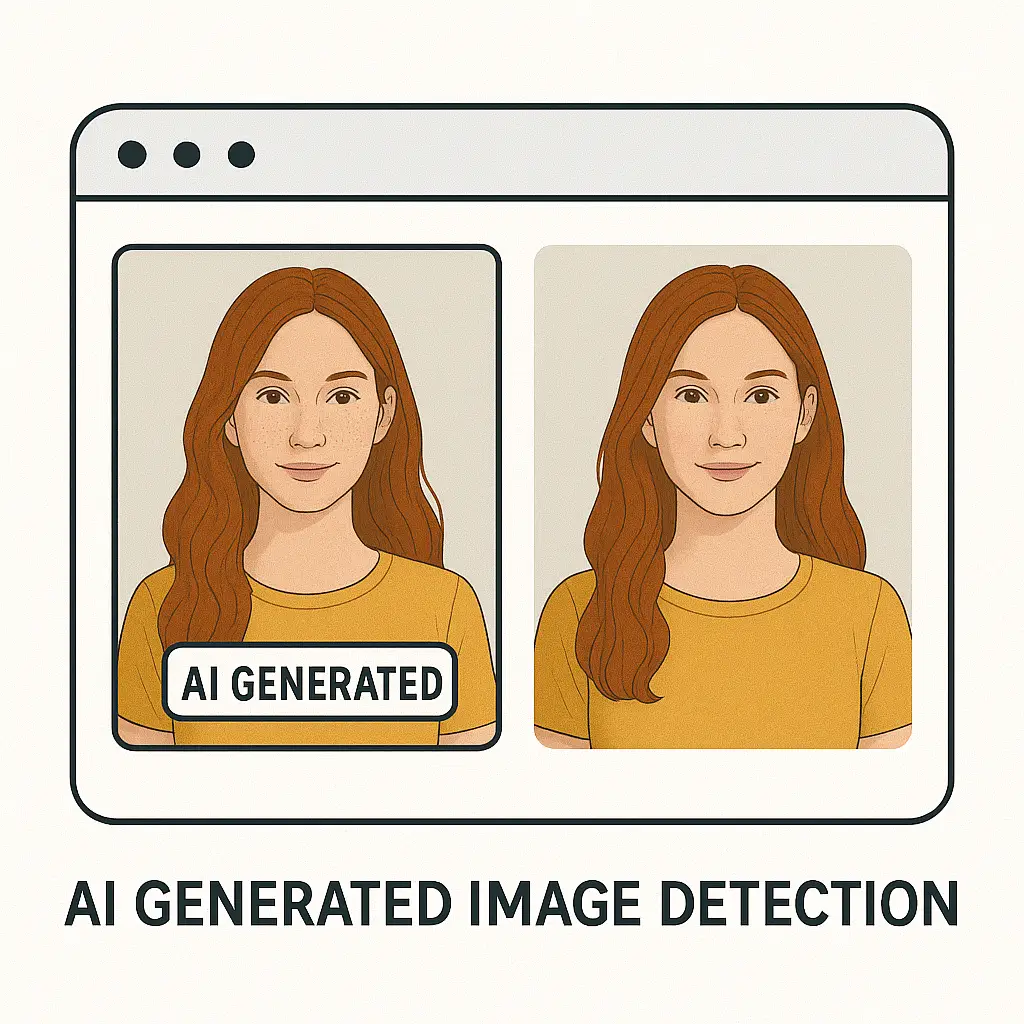
AI generated image detection is a way to check whether a picture was made by a human or created by an artificial intelligence model. It has become important because many people use AI tools to make images that look very real, and it can be hard to tell where they came from. This method helps people understand the source of images, keep information honest, and avoid confusion when pictures spread very quickly online. As AI tools become more common, the need to identify their work becomes stronger. AI image detection helps keep trust in pictures used for news, learning, and everyday communication. It gives people clarity about how an image was made and helps support safe use of digital tools across many places.
1. How AI Generated Image Detection Works
AI generated image detection studies small details in a picture to tell if it came from a camera or was made by a machine. The system checks tiny patterns that people often miss, such as uneven edges, strange lighting marks, or repeating shapes that appear in generated images. It learns from many examples, which helps it notice these clues more clearly over time. This form of detection is one of the modern image search techniques, as it also relies on reading visual signals to understand how an image was created. Some tools compare pictures with known AI styles to see if they match certain patterns. All these steps work quietly in the background to give a steady and clear result.
1.1 Pixel-level pattern analysis
Pixel-level analysis focuses on extremely small color and structure details that come together to form the full image. AI generated pictures often show repeated shapes or color shifts that follow the way the model constructs an image patch by patch. These patterns stay very soft and blended, so people rarely notice them while looking. The detection system studies these tiny pixel groups and compares them with known examples stored in its learning memory. Over time, it recognizes signs that do not appear in real photos, such as perfect gradients or oddly uniform textures. By understanding these clues, pixel-level analysis helps find the difference between natural camera noise and AI-created textures. It works quietly in the background but is one of the strongest ways to check image authenticity.
1.2 Texture and noise comparison
Texture and noise comparison studies how natural surfaces look when taken by a real camera versus how AI tools attempt to copy them. Real cameras create uneven noise because of light and sensor movement, while AI may form noise that looks too smooth and controlled. When detection tools scan the surface of the picture, they can spot this difference and use it as a sign. The system checks how shadows fall, how edges blend, and how small details behave when zoomed in. Tools like Hive’s image detection model use these ideas to understand surface structure without needing high technical input from the user. This method gives a steady way to observe how an image forms and whether each part behaves the way natural scenes usually do.
1.3 Metadata inspection
Metadata inspection looks at the information stored inside the file that explains how the picture was saved or created. Many AI generated images come with missing or unusual metadata because they are not produced by a camera. When a tool scans the metadata, it often finds marks that show an AI program shaped the image. Even if someone edits the picture later, parts of the metadata may still show patterns not found in natural photography. The detection system uses this to build a stronger case when deciding the source. It works well when combined with visual clues because both support each other. This makes metadata a useful part of the full detection process.
1.4 Structural and edge anomaly detection
Structural anomaly detection studies how shapes, edges, and lines behave in the picture. AI models sometimes produce uneven edges, strange object outlines, or soft areas that should normally appear clear. When detection tools scan these shapes, they look for places where the structure bends or repeats unnaturally. This helps identify when the model had trouble with symmetry, hands, reflections, or fine patterns. Even improved AI tools still leave slight hints in these areas because they estimate shapes rather than capturing them. The method gives a strong signal when paired with other checks. It also helps identify images where objects appear blended or slightly incorrect, which often happens in generated pictures.
1.5 Color consistency mapping
Color consistency mapping checks whether the colors in the image follow natural lighting and blending rules. Real scenes change color smoothly when light moves across them, but AI generated images can show sudden shifts or oddly balanced tones. The detection system scans each region of the picture and compares it with how colors usually behave outdoors or indoors. For example, skin tones, sky colors, and clothing patterns often follow natural rules that AI sometimes fails to copy exactly. Tools such as JPEGsnoop examine color compression signs that reveal when an image has been altered or formed digitally. Color mapping helps build a clear understanding of how the picture was produced and whether the tones match expected patterns.
2. Why AI Generated Image Detection Matters
The importance of AI image detection grows as more pictures are created digitally and shared widely. Many people use images to learn, communicate, and make decisions, so it becomes important to understand whether the content is real. When AI images appear without context, they can confuse viewers because they often look very natural. Detection provides a simple way to add clarity so people know what they are looking at. It supports honesty in storytelling and helps stop misunderstandings before they spread. As technology grows, detection acts like a helpful guide that keeps people aware of how images are made. It creates a safe space where digital creativity and truth can exist together without mixing in confusing ways.
2.1 Building trust in shared media
Building trust in shared media matters because images travel fast and influence how people think. When anyone can create lifelike pictures with simple tools, the line between real and artificial becomes thin. Detection systems help restore confidence by offering a reliable way to understand image sources. When people know an image has been checked, they feel more comfortable using it for learning, reporting, or decision-making. This trust becomes more important in places like news, education, and public communication, where clarity supports fairness. Even though AI tools grow stronger, detection works alongside them to keep information steady and dependable. It helps everyone feel safer when viewing and sharing pictures.
2.2 Protecting users from misinformation
Misinformation spreads quickly, especially when images appear real at first glance. AI generated pictures can be used to shape false stories or create confusion. Detection tools give people a way to check images so they do not get misled by crafted visuals. The tools compare patterns, colors, and structures to help identify images that may not be real. When people use detection, they become more aware and better prepared to handle confusing visuals. This creates a more stable environment where pictures are less likely to cause harm. The process also encourages healthy habits when sharing digital content. By reducing wrong information, detection supports clearer communication and safer discussions.
2.3 Supporting creative but responsible use of AI tools
AI generated images are helpful for art, design, and storytelling, but they must be used responsibly. Detection helps set a clear boundary so creators can share work without causing confusion. It ensures that viewers understand the nature of the image, even if it looks real. When creators know their images can be checked, they are more mindful about how they share them. This improves trust between creators and audiences, especially when images are used in public settings. Detection also allows new AI tools to grow without risking misuse. As a result, both creativity and responsibility can develop together in a balanced way.
2.4 Supporting academic and research integrity
Schools, researchers, and scientific groups often depend on real images to support their findings. If an AI generated image appears in research without being labeled, it can change the meaning of the results. Detection tools make it easier to check images before they are published. They help teachers and students maintain honest work by identifying pictures that did not come from real experiments or observations. This strengthens the trust people place in studies and reports. It also guides younger learners who are still forming good habits about digital information. With detection, academic spaces become more secure and reliable for everyone involved.
2.5 Helping organizations verify media sources
Organizations that work with photos, reports, or digital records need to know if an image is genuine. Detection gives them a steady way to check picture sources without using complex processes. This helps businesses, agencies, and teams make better decisions because they trust the images they receive. When workers use detection tools, they reduce mistakes that could happen from using false visuals. They also build stronger systems for reviewing information. By verifying media, organizations ensure that communication remains clear inside and outside their group. The method supports smooth workflows and keeps content honest across different areas.
3. Key Signs an Image Might Be AI Generated
Even though AI images look natural, they often include small details that give away their origin. These signs may hide in the background, shape outlines, or textures that behave differently from real photographs. Detection tools study these clues carefully to understand how the image was formed. People may not notice these signals, but computers can compare them with many examples. These clues help build a clear picture of whether the image follows natural rules. While AI improves over time, most generated pictures still show at least a few tiny marks of their creation process. By learning these signs, detection systems become more accurate and dependable, supporting safer use of digital images.
3.1 Unnatural lighting behavior
Many AI generated images struggle with realistic lighting because the model estimates brightness rather than recording it. This can create shadows that point in odd directions or highlights that do not match the scene. Detection systems examine brightness levels across the picture and compare them with how natural scenes usually look. When the light appears too even or shifts suddenly, it may suggest artificial creation. These signs grow clearer when observing reflective surfaces or skin textures, where light must behave consistently. Even if the image looks real, slight lighting mistakes often remain in the details. By studying these areas, detection tools build a stronger case for identifying generated content.
3.2 Distorted shapes or misplaced objects
AI sometimes creates objects that look correct at first glance but fall apart when inspected closely. Shapes may appear stretched, too smooth, or strangely positioned. Items in the background may blend in ways real scenes do not allow. Detection systems scan edges and object placement to spot these mismatches. For example, a window frame may bend unnaturally or a chair may have uneven legs. The system checks how each part connects, making it easier to recognize shapes that were formed mathematically rather than captured naturally. These distortions often appear when the AI model tries to fill in missing details. Even small oddities can reveal the true source of the image.
3.3 Repeated or patterned textures
Many AI models create textures by copying small patterns over a larger area. This can make surfaces look repeated or too smooth. Detection tools zoom into these regions and observe how natural they appear. Real textures vary randomly, but generated ones often show controlled repetition. When the tool finds matching patches that appear too similar, it signals AI involvement. This happens with grass, skin, fabric, and walls because these surfaces rely on tiny changes in nature. Even advanced models leave soft traces of repetition. By studying textures closely, detection tools get better at understanding how AI forms complex surfaces.
3.4 Difficulty recreating hands, faces, and fine details
Hands, faces, and tiny details are often challenging for AI models because they require precise structure. Generated hands may show extra fingers, blended skin, or incorrect positions. Facial features might appear too smooth or slightly uneven when observed closely. Detection systems pay special attention to these areas because they commonly expose mistakes. Fine details like jewelry, leaves, or text may also look warped or unclear. The tools scan for inconsistencies between expected structure and the shapes found in the image. This makes it easier to detect when the AI model struggled to produce a realistic version. These clues remain strong even as image models improve.
3.5 Incorrect reflections or mirrored surfaces
Reflections in water, glass, or shiny objects follow strict natural rules based on angle and light. AI generated images often miss small changes required for accuracy. Detection systems compare the reflected scene with the main view to find mismatches. For example, a reflection might show colors that are too bright or shapes that do not match the object above. The tool examines how straight, curved, or blended the lines appear. When reflections behave unnaturally, they hint at artificial creation. These small clues help build stronger detection results, especially when combined with texture and structure checks.
4. Tools Used for AI Generated Image Detection
Detection tools come in many forms, ranging from simple online checkers to advanced systems used by researchers. They help users understand whether an image was made by a camera or an AI model. These tools study patterns, colors, structure, and metadata to reach a clear conclusion. Many of them work quietly in the background and are easy for anyone to use. They provide a helpful layer of clarity when sharing or viewing images online. Tools like Hive AI Image Detector or JPEGsnoop are common examples that people use because they offer quick and clear results without needing special knowledge. With these tools, image checking becomes a simple step in digital communication.
4.1 Online quick-check tools
Online quick-check tools are simple websites where users upload a picture and receive a detection result. These tools look for patterns that commonly appear in generated images. They help people who want a fast way to understand whether an image might be real or created by a model. The process usually takes only a few moments and does not require any special device or software. Tools like Hive’s online checker are often used because they provide easy access and clear results. These quick checks help people feel more confident before sharing pictures with others. They work as a light first step in the detection process.
4.2 Local analysis software
Local analysis software works directly on a computer and lets users inspect images more deeply. It can read file structure, metadata, and pixel details without sending data online. This offers more privacy and more detailed scanning options. Programs like JPEGsnoop show how the image was built and whether certain digital patterns appear that point to generation. People who work with many images often prefer local tools because they give more control. The software can also compare multiple images at once. These features help users understand small clues that reveal how an image was made. Local tools make detection more flexible for careful checking.
4.3 Specialized research models
Researchers build models that study images using large sets of examples. These models learn how AI tools create images and how natural photos differ. They use deep scanning rules to find signs that are too small for people to notice. These systems help improve detection accuracy over time because they learn from new examples as AI technology grows. Some research models also provide scores that show how certain they are about their decision. This supports careful analysis for academic or investigative work. Even though they are complex on the inside, their purpose remains simple: to help identify image origins clearly.
4.4 Multi-feature inspection tools
Multi-feature tools inspect images from several angles at once. They check pixel patterns, colors, edges, and metadata together before forming a result. This creates a more complete picture of how the image was made. These tools help reduce mistakes because they do not depend on one single clue. When one feature appears unclear, another feature often provides clarity. The system combines all findings into one decision that is easier for people to understand. These multi-feature tools support more accurate checking for detailed work. They offer a strong balance between speed and reliability.
4.5 Browser-based plugins
Browser plugins allow people to check images while browsing websites. They add a small button or menu that triggers a detection scan. This makes checking faster because users do not have to open a new tool. The plugin quickly reads the image and compares it with known patterns of AI generation. It then gives a simple result that helps users understand the source of an image before trusting it. These plugins often work in the background without disturbing the browsing experience. They can be helpful for users who handle many images each day, making detection more natural in everyday use.
5. Challenges in Detecting AI Generated Images
Detecting AI images can be difficult because image models improve quickly and become better at copying natural scenes. As tools grow stronger, the small clues that once exposed generated images start to fade. Detection systems must learn new patterns regularly to stay accurate. This creates a constant race between generation and detection. The process also becomes harder when people edit images after creation because edits can remove or blur detection signs. Even though challenges exist, researchers continue improving detection methods so users can rely on them. These challenges help push the development of better tools and clearer strategies.
5.1 Rapid improvement of image generators
AI image models change quickly and learn to hide their small mistakes. Tools that worked well even a few months ago may not perform as strongly against new models. This rapid growth makes it hard for detection systems to stay updated. Each new generation tool removes older flaws and adds more natural details. As a result, detection must adjust to learn these new clues. Researchers often gather many new images to train detection models so they remain useful. The process continues as both creation and detection improve. This fast pace forms one of the biggest challenges in the field.
5.2 Edited images hide source clues
When someone edits an image after creation, the edit can remove or soften the signs that detection tools rely on. Cropping, resizing, smoothing, or color changes may hide pixel patterns. This makes it harder to know whether the picture started as AI generated. Many people edit images for harmless reasons, but the edits still affect the source signals. Detection systems try to read remaining clues, yet the process becomes less certain. This challenge encourages new research into how edits affect detection. It also shows why detection must look at multiple features instead of just one clue.
5.3 Large variety of generation styles
AI tools come from many developers and follow different rules when forming images. Each model leaves its own signature, and some hide it better than others. The wide variety makes it harder for detection tools to create a single set of rules that fit all generators. Some tools make very sharp images, while others create soft or blended textures. This means detection must handle many possible styles. The system often needs many examples from each generator to learn their patterns. This variety keeps detection models working harder to stay accurate.
5.4 Blended or mixed-source images
Sometimes people mix parts of AI generated images with real photos. This blending creates a picture that is partly natural and partly machine-made. Detection becomes more difficult because the signs appear only in certain areas. The system must study each region carefully to understand the full story of the image. If the blended part is small, the clues may be weak. This makes the detection result less clear than usual. Even then, the system tries to gather enough clues to make a decision. Mixed images remain a challenging area for detection tools.
5.5 Incomplete or missing metadata
Many AI images contain little or no metadata because they were not captured by cameras. However, people often remove metadata from real photos too. This makes metadata less reliable as a single clue. When metadata is missing, detection tools must depend on visual features alone. Missing metadata limits how much context the system has about the picture. It can also make digitally edited photos appear similar to AI images. This challenge shows why detection must rely on many features together instead of depending on metadata alone.
6. The Future of AI Generated Image Detection
The future of AI image detection will continue growing as both creation and detection tools advance. Detection systems will study more detailed clues and become better at reading small signals that humans cannot see. New models may compare images with large libraries of examples to build stronger conclusions. As more people rely on digital pictures, detection tools will become common across websites, apps, and devices. They will work quietly in the background to help keep information honest. Over time, these tools will form an important part of how people share and understand digital content. The future holds steady progress toward clearer and more dependable detection systems.
6.1 Stronger pattern recognition systems
Future detection tools will likely include stronger pattern recognition systems that understand tiny details more clearly. These systems will learn from millions of examples and become skilled at spotting the smallest differences between natural and generated pictures. They will help users rely less on surface clues and more on deep visual understanding. As AI models grow more advanced, pattern recognition must follow the same path so it can keep up. These improved systems will support clearer insights in many settings. They will help people feel secure when viewing or sharing images online.
6.2 Wider use in everyday platforms
More websites, apps, and online tools may start including built-in detection features. These features will help people check images without needing separate software. The detection might happen automatically whenever images appear in messages or posts. This will make it easier for users to understand what they are seeing. The system will offer quick results that feel natural and helpful. It will support safe browsing and help reduce confusion caused by misleading pictures. As detection becomes part of daily use, it will help shape a more informed digital space.
6.3 Improved accuracy through continued learning
Detection tools will continue learning from new examples as AI models evolve. They will update their rules often and grow more accurate over time. As they learn, they will better understand how different styles of generation appear in images. This steady learning process will help reduce mistakes and strengthen trust in the results. The tools will not need people to train them manually because they can gather new examples on their own. This will make detection more dependable in many situations. The future will bring stronger learning systems that support clearer decisions.
6.4 Expanded support for global communities
As detection tools improve, they will become more accessible to many regions and languages. This will help people everywhere understand the origins of images they see daily. The tools may also adjust to different types of cultural visuals and local photo styles. By supporting global communities, detection helps create equal access to clear information. This will allow teachers, students, families, and workers around the world to feel more confident when using digital images. The growth of such tools supports a more open and fair environment for sharing pictures.
6.5 Increased cooperation between AI creators and detectors
In the future, developers of AI tools and detection systems may work together more closely. This cooperation will help both sides understand how to create clearer rules about image origins. Generation tools may include optional markers that make detection easier without affecting creativity. Detection tools will then use these markers along with visual clues to form strong decisions. Working together will help support safe and responsible growth of digital image technology. It will allow people to enjoy the benefits of creative tools while still keeping trust in shared content.